Why Gen Z Is Returning to Uniform Dressing (And What It Signals About the Future of Identity)
Gen Z is moving away from hyper-individuality toward uniform dressing. From quiet luxury to archetypal aesthetics, this shift reveals how identity is becoming structured, optimised, and socially legible in the digital age.

Why Gen Z Is Embracing Uniform Dressing in 2026
For more than a decade, the dominant narrative surrounding Gen Z has been one of radical self-expression. This is a generation raised in an environment where identity is fluid, aesthetics are endlessly remixable, and personal style is both a creative outlet and a social signal. Platforms such as TikTok and Instagram have turned fashion into a real-time, participatory system in which trends emerge, evolve, and dissolve at unprecedented speed. In this context, individuality has not only been encouraged, it has been expected.
Yet beneath this surface of hyper-expression, a quieter shift is taking place. Across major cities and digital platforms, a subtle convergence is emerging in how young people dress. The silhouettes are increasingly familiar, the palettes restrained, and the references repeated with only slight variation. Rather than an explosion of uniqueness, what appears is a pattern of recognisable sameness. Gen Z is not abandoning individuality altogether, but it is increasingly organising it into repeatable formats that resemble uniforms.
Identity as a System: From Expression to Optimisation
This shift reveals something more complex than a simple return to conformity. What is unfolding is a recalibration of identity itself, shaped by the pressures of visibility, the economics of attention, and the cognitive limits of constant choice. Uniform dressing, in this context, is not a regression. It is an adaptation to a world in which identity is continuously performed, evaluated, and optimised.
From Aesthetic Abundance to Decision Fatigue
To understand the return of the uniform, it is necessary to examine the conditions that have produced it. Gen Z has grown up within an unprecedented landscape of aesthetic abundance. Every scroll through a social feed presents a cascade of visual possibilities, each offering a different interpretation of style, identity, and belonging. Microtrends, once seasonal, now emerge and disappear within weeks. What was once niche can become mainstream overnight, only to be replaced just as quickly.
While this environment appears to offer freedom, it also introduces a new form of pressure. The act of getting dressed is no longer a private or purely functional decision. It is a public-facing expression that is subject to interpretation, comparison, and judgement. Clothing becomes a form of communication, and every outfit contributes to a broader narrative about who someone is and where they belong.
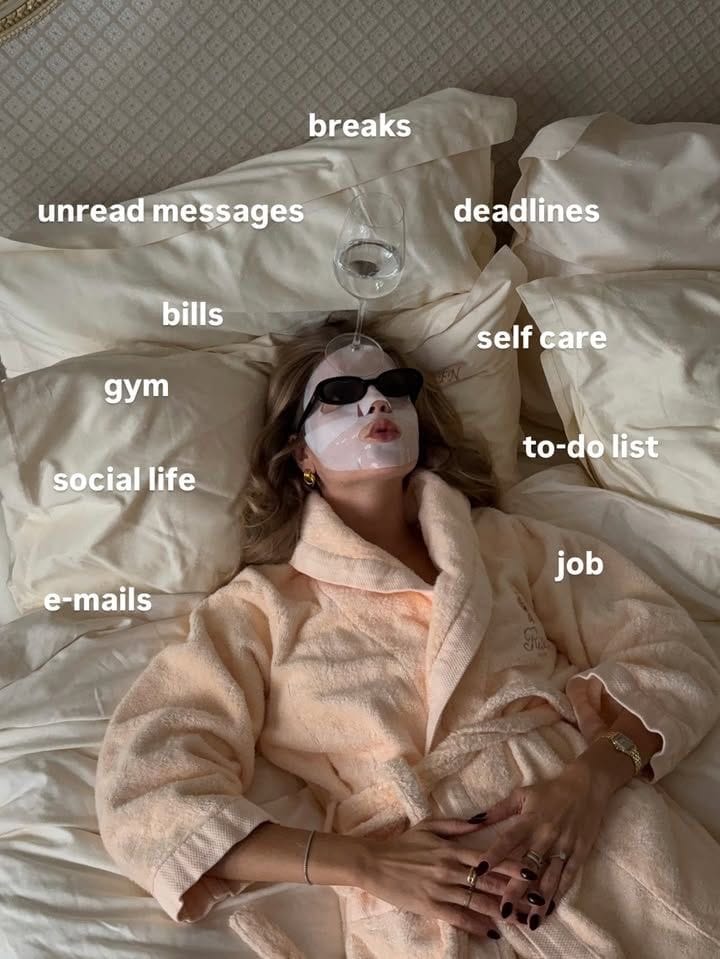
This constant evaluation produces a form of decision fatigue that extends beyond productivity and into identity itself. The question of what to wear is no longer trivial. It requires navigating a complex web of references, expectations, and potential interpretations. In such a landscape, the cognitive load of continuous self-expression becomes significant.
Uniforms offer a solution to this problem. By reducing the number of decisions required, they create a sense of stability within an otherwise fluid environment. A uniform does not eliminate individuality, but it structures it. It allows individuals to operate within a defined aesthetic framework, reducing uncertainty while maintaining a degree of personal variation.
Archetypes as a New Form of Social Code
The contemporary uniform differs from its historical predecessors in one crucial way. It is not imposed by institutions, but assembled through cultural systems. Rather than being dictated by schools or workplaces, today’s uniforms emerge from a dynamic interplay between social media, cultural media, and peer networks.
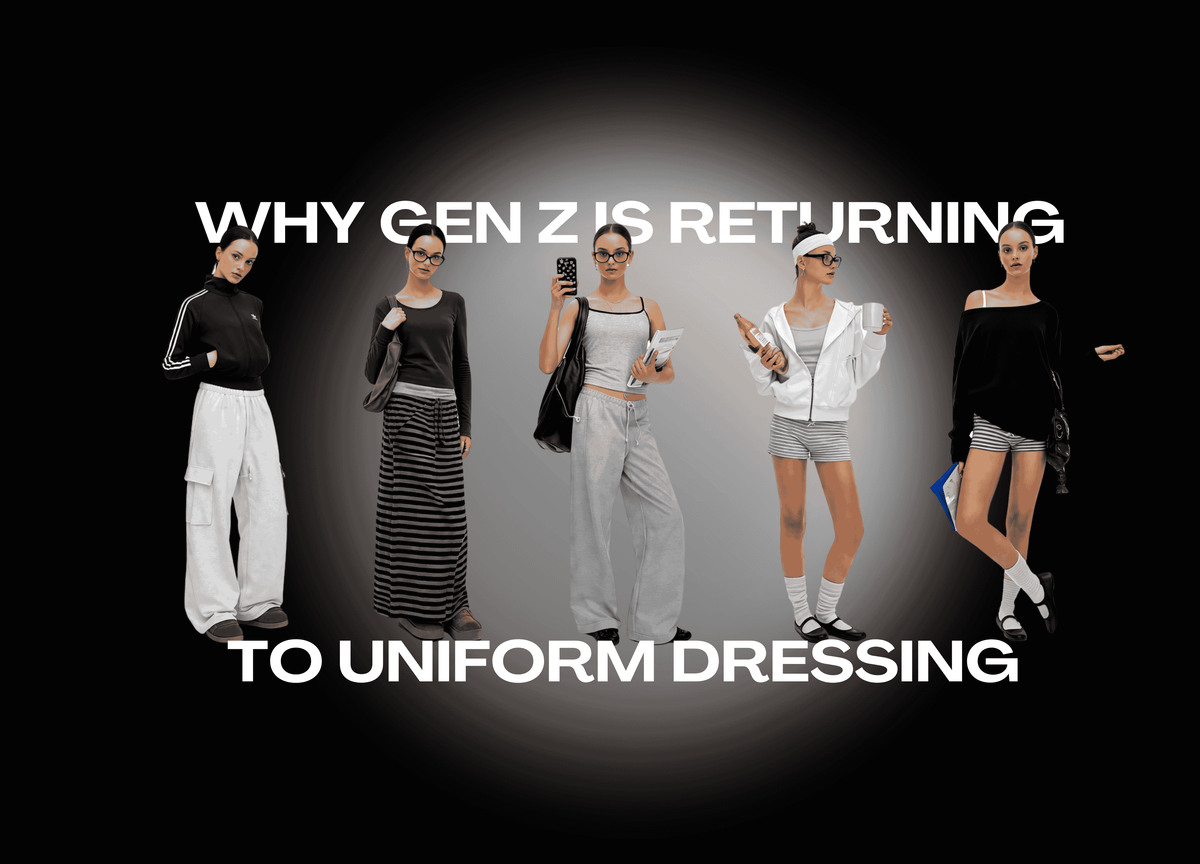
This has led to the rise of archetypal dressing, in which individuals adopt a recognisable aesthetic identity that signals belonging within a specific cultural context. These archetypes function as visual shorthand, allowing others to quickly interpret a person’s tastes, values, and social positioning.
Examples of these archetypes are abundant and increasingly specific. The “clean girl” aesthetic, characterised by minimalism, neutral tones, and understated grooming, communicates discipline, wellness, and a form of aspirational simplicity. The “West Village girl” evokes a curated blend of casual sophistication and urban nostalgia. “Corporate core” and its adjacent interpretations translate professional ambition into visual form, balancing trend awareness with perceived competence.
Each of these identities operates as a template. The individual does not need to construct an entirely original aesthetic from scratch. Instead, they select an existing framework and adapt it to their own context. This modular approach to identity reduces complexity while preserving a sense of agency.
The result is a system in which individuality is expressed through variation within a predefined structure. The uniform, in this sense, is not restrictive. It is enabling, providing a foundation upon which identity can be efficiently built and communicated.

The Professionalisation of Appearance and the Rise of Quiet Luxury
The return of the uniform becomes particularly visible within professional environments, where the stakes of perception are higher and the tolerance for ambiguity is lower. In these contexts, the concept of Quiet Luxury has gained significant traction, offering a form of aesthetic neutrality that balances trend awareness with restraint.
Quiet luxury is defined not by overt branding or conspicuous consumption, but by subtle indicators of quality, fit, and material. It signals competence without drawing excessive attention, allowing individuals to navigate professional spaces without risking negative judgement. For Gen Z, entering a labour market characterised by uncertainty and heightened competition, this approach offers a form of risk management.
Dressing in a way that is “conservatively trendy” allows young professionals to align with institutional expectations while maintaining a connection to contemporary culture. It is a strategic compromise that prioritises legibility over experimentation. In an environment where first impressions carry significant weight, the ability to appear appropriate becomes a form of social capital.
This dynamic reflects a broader shift in how fashion operates within professional contexts. Rather than serving as a vehicle for self-expression, it becomes a tool for signalling alignment, competence, and adaptability. The uniform, in this sense, functions as a protective layer, enabling individuals to navigate complex social environments with greater confidence.
Uniformity and the Paradox of Personalisation
At first glance, the rise of uniform dressing appears to contradict another defining characteristic of Gen Z culture: the pursuit of extreme personalisation. Across industries, from fashion to technology, there has been a growing emphasis on customisation, individuality, and self-definition. The expectation is that products and experiences should be tailored to the individual, reflecting their unique preferences and identities.
However, these two trends are not mutually exclusive. In fact, they are deeply interconnected. Uniforms provide the structure within which personalisation can occur. They establish a baseline, a set of parameters that define the overall aesthetic, while allowing for variation in detail.
This can be understood as a layered approach to identity. At the macro level, individuals align with a recognisable archetype, ensuring that their appearance is legible within a broader cultural context. At the micro level, they introduce subtle variations that reflect personal taste, whether through accessories, styling choices, or individual preferences.
This balance between conformity and variation allows for a form of controlled individuality. It reduces the risk associated with standing out too much while preserving the ability to express difference. In a culture that values both belonging and distinction, this duality becomes essential.
What This Signals About the Future of Identity
The return of uniform dressing offers insight into a deeper transformation in how identity is constructed and communicated. Several key signals emerge from this shift, each pointing toward a broader reconfiguration of cultural dynamics.
The first is that identity is becoming increasingly operational. Rather than being a static expression of self, it is treated as a system that can be optimised for different contexts. Individuals adopt specific modes of presentation depending on the environment, selecting the version of themselves that is most appropriate for the situation. Uniforms facilitate this process by providing ready-made frameworks that can be deployed as needed.
The second signal is that belonging is gaining importance relative to originality. In a fragmented digital landscape, where communities are dispersed and attention is limited, the ability to signal affiliation quickly becomes valuable. Uniforms enable this by offering clear, recognisable markers of identity that others can easily interpret.
The third signal is the decline of effortful individuality. While originality remains culturally valued, the resources required to sustain it, in terms of time, energy, and cognitive effort, are significant. Uniforms provide a more efficient alternative, allowing individuals to maintain a sense of identity without the constant burden of reinvention.
Finally, the rise of uniform dressing suggests that aesthetic codes are becoming a primary form of cultural literacy. Where previous generations signalled identity through music, ideology, or subcultural affiliation, Gen Z increasingly relies on visual cues. Clothing becomes a compressed form of information, conveying complex ideas through immediate, recognisable signals.
Implications for Culture, Brands, and Power
The implications of this shift extend beyond fashion, influencing how culture is produced, consumed, and understood. For brands, the rise of uniform dressing presents both a challenge and an opportunity. Traditional approaches that focus on individual products or seasonal trends may struggle to resonate in a landscape defined by archetypes and systems.
Instead, success will depend on the ability to create and own specific identity frameworks. Brands that can define a recognisable “type” and provide the tools for individuals to inhabit that identity will hold a strategic advantage. This requires a shift from selling products to designing systems of meaning, in which each item contributes to a broader narrative.
For cultural institutions and media platforms, the increasing importance of visual codes underscores the need to understand how identity is constructed and communicated in digital environments. The role of media is no longer limited to documenting trends. It actively participates in shaping the frameworks through which identity is expressed.
From a power perspective, the standardisation of identity raises questions about agency and influence. While uniforms appear to be self-selected, they are shaped by underlying systems, including algorithms, platform dynamics, and cultural gatekeepers. Understanding who defines these systems, and how they evolve, becomes critical.
What Happens Next
Looking ahead, the trajectory of this trend suggests several potential developments. The first is the emergence of algorithmically informed styling systems, in which artificial intelligence plays a role in optimising appearance for specific contexts. These systems could recommend outfits based on factors such as environment, audience, and desired perception, further reinforcing the operational nature of identity.
The second is the continued fragmentation of archetypes into increasingly niche categories. As cultural systems evolve, new identities will emerge, each with its own set of visual codes and behavioural expectations. This will allow for greater specificity while maintaining the underlying structure of uniformity.
The third is the potential for a counter-movement that rejects legibility altogether. In response to the pressures of standardisation, some individuals may seek to disrupt or obscure the codes that define identity, embracing ambiguity as a form of resistance. This would represent a return to a more experimental, less predictable approach to self-expression.
Conclusion: Clarity as the New Status Signal
The return of the uniform is not a rejection of individuality, but a response to the conditions under which individuality is now performed. In a world defined by constant visibility, rapid change, and cognitive overload, the ability to present a clear, coherent identity becomes valuable.
Uniforms provide that clarity. They reduce complexity, enhance legibility, and enable individuals to navigate social environments with greater ease. They transform identity from an open-ended question into a structured system that can be managed and optimised.
Explore more Gen Z trends here.
 Brad Davidson