Cancel Culture Is Dead. Boundary Panic Is Next.
Cancel culture is evolving into "boundary panic." Discover how the Age of Access and parasocial relationships are turning celebrity into a service industry.
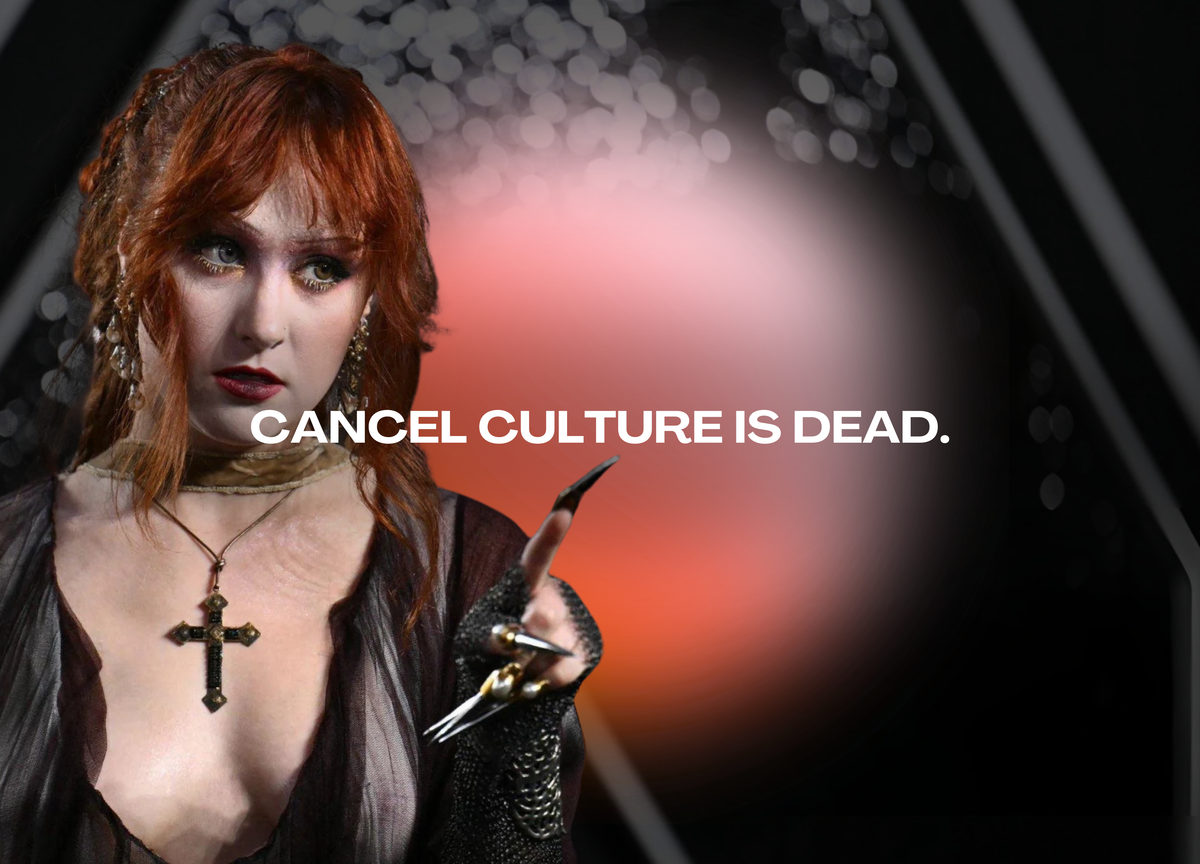
For the better part of a decade, we have treated "cancel culture" as if it were a high-stakes moral referendum. A public figure missteps, a historical tweet resurfaces, or an ethical line is crossed, and the digital collective assembles to decide if that person should remain culturally legible. The debate has always been framed in the binary of the courtroom: Is this accountability or censorship? Is it justice or an overreach of the mob?
But as we move through 2026, that frame feels increasingly dusty—a relic of a simpler internet.
What we are witnessing today is not merely a culture of cancellation. It is the dawn of the Age of Compulsory Access. We have moved past the era where public figures are expected only to perform, create, or communicate. Now, they are expected to remain emotionally available, politically fluent, physically reachable, and endlessly interpretable. The modern backlash occurs not just when someone does something "wrong," but increasingly when they fail to comply with the mounting emotional demands of the public.
The recent saga surrounding Chappell Roan is the definitive case study for this shift. It isn’t a story about a "perfect victim" or a simple case of internet toxicity; it is a signal that the social contract of celebrity has been rewritten. The crowd no longer assumes the right to watch—they assume the right to access.
The Architecture of Boundary Panic
Roan became a cultural flashpoint precisely because she dared to build a fence. In 2024, she famously pushed back against predatory fan behavior and paparazzi. Later that year, she withdrew from the All Things Go festival, citing an overwhelming mental and emotional toll.
The most revealing moment, however, arrived in March 2026. After Brazilian footballer Jorginho accused a security guard at a São Paulo hotel of mistreating his stepdaughter because she recognized Roan, the internet didn't just report the news—it demanded Roan’s accountability for an interaction she didn't even witness. Despite her clarification that the guard was not hers, the moral blame stuck.
This sequence reveals a decoupling of "wrongdoing" from "punishment." The issue wasn't ethics; it was compliance. The audience felt entitled to a version of Roan that was warm, grateful, and eternally "on." When she signaled that she was a human being with limits rather than a 24/7 service interface, it triggered what we might call Boundary Panic.
Boundary panic emerges when a public figure interrupts the fantasy of seamless intimacy. Social media and influencer culture have trained us to view celebrities as "relational interfaces" rather than distant stars. They narrate their traumas, perform political literacy in real-time, and offer a sense of closeness that previous generations of fame never required. When an artist resists any part of this arrangement, the audience feels a sense of personal betrayal. "The issue is whether a public figure can still be read as sufficiently warm, grateful, and emotionally compliant. The backlash is no longer just about ethics; it is about tone and the volatile politics of proximity“.
This data confirms that the modern economy of fame is built on a "subscription model" of the self. We don't just buy the album; we expect to own a piece of the artist’s psyche. When they withdraw, we don't see a person taking a break; we see a product malfunctioning.
The Death of the "Unknowable" Artist
The implications of this shift are profound for who gets to survive in the public eye. In a culture that rewards constant access, the survivors are rarely the most talented. They are the most available.
We are entering a period where those most fluent in "platform intimacy"—those willing to collapse their private selves into public performances—will flourish. Everyone else risks being labeled as "aloof," "ungrateful," or "difficult." This is particularly punishing for women and queer artists, who have historically been expected to perform extra emotional labor. They are expected to provide not just art, but care.
Perhaps the defining struggle of the next era is not over "free speech" in the abstract, but over the right to remain partially unknowable.
If Chappell Roan is a signal, the future of fame belongs to those who can redesign the terms of access. In an era of total exposure, opacity is the new power. Setting a boundary is currently a reputational risk, but it is fast becoming the new cultural frontier.
The Death of the "Unknowable" Artist
The implications of this shift are profound for who gets to survive in the public eye. In a culture that rewards constant access, the survivors are rarely the most talented. They are the most available.
We are entering a period where those most fluent in "platform intimacy"—those willing to collapse their private selves into public performances—will flourish. Everyone else risks being labeled as "aloof," "ungrateful," or "difficult." This is particularly punishing for women and queer artists, who have historically been expected to perform extra emotional labor. They are expected to provide not just art, but care.
Perhaps the defining struggle of the next era is not over "free speech" in the abstract, but over the right to remain partially unknowable.
If Chappell Roan is a signal, the future of fame belongs to those who can redesign the terms of access. In an era of total exposure, opacity is the new power. Setting a boundary is currently a reputational risk, but it is fast becoming the new cultural frontier.
The Death of the "Unknowable" Artist
The implications of this shift are profound for who gets to survive in the public eye. In a culture that rewards constant access, the survivors are rarely the most talented. They are the most available.
We are entering a period where those most fluent in "platform intimacy"—those willing to collapse their private selves into public performances—will flourish. Everyone else risks being labeled as "aloof," "ungrateful," or "difficult." This is particularly punishing for women and queer artists, who have historically been expected to perform extra emotional labor. They are expected to provide not just art, but care.
Perhaps the defining struggle of the next era is not over "free speech" in the abstract, but over the right to remain partially unknowable.
If Chappell Roan is a signal, the future of fame belongs to those who can redesign the terms of access. In an era of total exposure, opacity is the new power. Setting a boundary is currently a reputational risk, but it is fast becoming the new cultural frontier.
The Reading List
Research and sources used in this report.
The Case Files
• Associated Press. “Chappell Roan pushes back after soccer star Jorginho alleges his daughter was mistreated.” Published March 23, 2026.
• Associated Press. “Chappell Roan drops out of All Things Go music festival: ‘Things have gotten overwhelming.’” Published September 2024.
The Data & Psychology
• Liu, et al. “Roles of parasocial relationship with eco-celebrities, motivation attribution, and message framing in virality of climate information on social media.” Computers in Human Behavior, Volume 160, November 2024.
• Kim and Song. “Celebrity’s self-disclosure on Twitter and parasocial relationships: A mediating role of social presence.” Computers in Human Behavior, Volume 62, September 2016.
• Liebers and Schramm. “Parasocial relationships, social media, & well-being.” Current Opinion in Psychology, Volume 45, June 2022.
The Market Impact
• Hudders, De Jans, and De Veirman. “Unrequited love? A mixed-methods study of parasocial engagement with social media influencers.” International Journal of Information Management, Volume 80, February 2025.
• Jin and Ryu. “Stop the unattainable ideal for an ordinary me! fostering parasocial relationships with social media influencers.” Journal of Business Research, Volume 132, August 2021.
• Pew Research Center. “Americans and ‘Cancel Culture’: Where Some See Calls for Accountability, Others See Censorship, Punishment.” May 19, 2021.