The End of Life Admin
As AI agents move beyond content generation to active orchestration, the "mental load" of adulthood is being outsourced. From cognitive offloading to "delegation creep," discover how the new personal algorithm is dismantling the traditional rituals of responsibility to rebuild human agency.
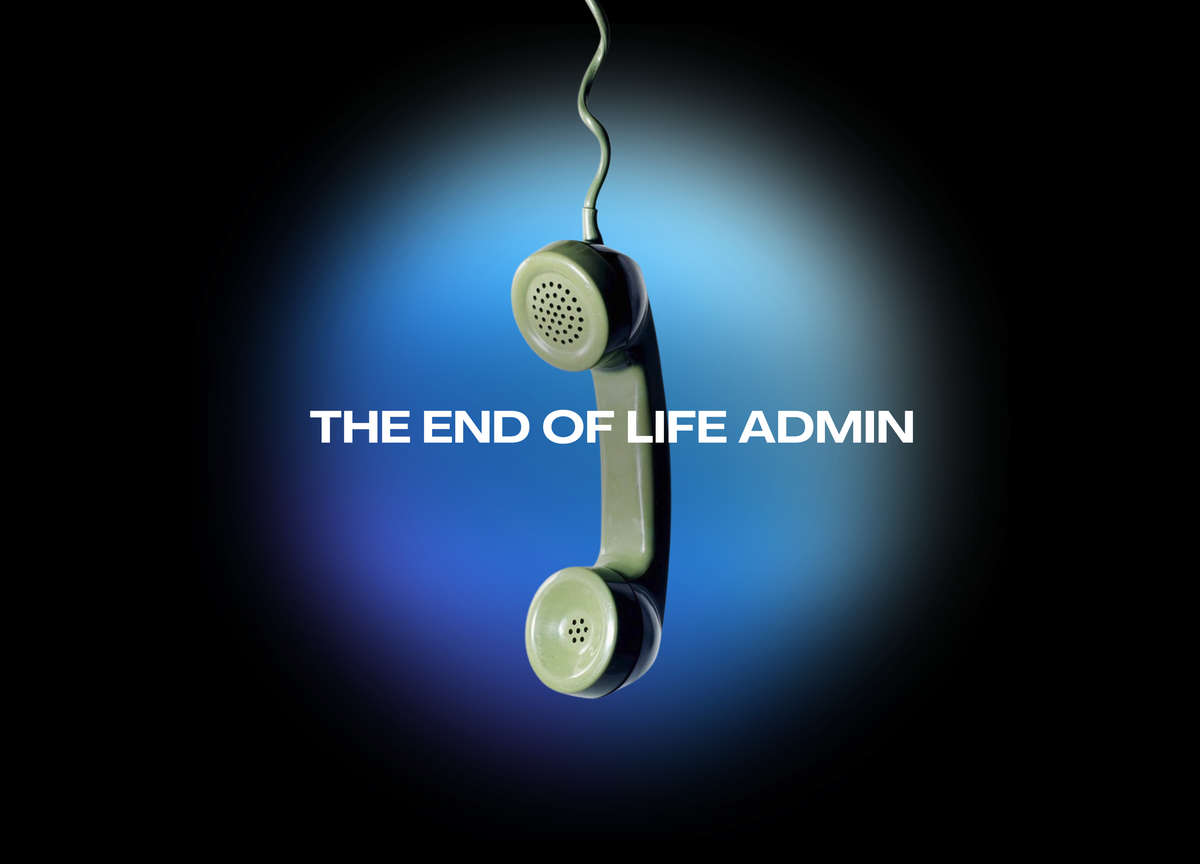
Why AI Assistants Are Quietly Replacing the Cognitive Work of Adulthood
There was a time when adulthood revealed itself through a slow, tectonic accumulation of invisible responsibilities. It wasn't a single moment, but a collection of frictions. Bills that needed parsing. Appointments that required a three-way dance of calendars. Insurance renewals that felt like a test of character. Travel logistics that rivalled military operations.
None of these tasks defined a life, yet together they created the hidden architecture of the modern self. Sociologists have long labeled this the “mental load”: the uncompensated, high-bandwidth cognitive labor required to coordinate an everyday existence in a bureaucratic world. For decades, this labor has expanded quietly, filling every crack in our downtime.
But a fundamental shift is underway. We are witnessing the beginning of the end of "Life Admin."
Across a burgeoning ecosystem of agents—including ChatGPT, Notion, Reclaim AI, Motion, and Perplexity—individuals are moving beyond using AI for content generation. They are beginning to outsource the very infrastructure of their lives. Schedules are being autonomously optimized; emails are being triaged and drafted without human eyes; groceries are being anticipated; and the messy, granular decisions of "how to get through Tuesday" are being handed over to the machine.
The shift is subtle, but the destination is profound. As we delegate the cognitive rituals that once defined maturity, we must ask: what happens to the person when the "adulting" is handled by an algorithm?
The Rise of the AI Life Manager
For twenty years, productivity software promised to liberate us. In reality, it mostly gave us better places to store our stress. A digital calendar might hold an event, but the human still had to decide if they were too tired to attend. A task list recorded a responsibility, but the "thinking" remained stubbornly manual.
The newest generation of AI tools represents a species-level jump. They do not simply store information; they interpret, prioritize, and act.
Modern AI assistants can now coordinate tasks across disparate digital silos. They don't just tell you that you have a meeting; they prep the briefing document, summarize the previous thread, and suggest moving your gym session because the commute will be hampered by rain. Industry observers are increasingly characterizing these systems not as "tools," but as AI Personal Chiefs of Staff.
In practice, the cognitive effort of "planning" is migrating from the prefrontal cortex to the cloud. We are seeing experimental AI agents demonstrate the ability to complete real-world loops: sorting emails, managing file hierarchies, and even negotiating purchases or utility switches online.
What was once a luxury reserved for the C-suite—the ability to offload the friction of existence to a personal assistant—is being democratized through code. We are entering the era of the AI Life Manager.
The Automation of Adulthood
The most revealing signals aren't coming from Big Tech alone, but from a wave of startups treating adulthood as an inefficiency to be solved.
Take Realworld, a platform positioning itself as the "digital operating system for adulthood." By allowing users to upload leases, insurance cards, and financial documents, it generates automated action plans and reminders. It doesn't just remind you to pay your renter's insurance; it helps you understand the policy and navigate the renewal. Its mission is blunt: automating adulthood.
This is gaining traction because we have reached "Peak Admin." The complexity of modern life—multi-layered subscription ecosystems, fractured digital identities, and labyrinthine financial services—has outpaced human bandwidth. The global personal productivity software market is projected to hit $150 billion by 2030, driven by a younger generation that views manual admin not as a rite of passage, but as a systemic failure.
The Science of Cognitive Offloading
This isn't just a trend in software; it's a fundamental change in human behavior. Psychologists call it cognitive offloading. Humans have always used external tools—writing, calculators, maps—to reduce mental effort. However, AI represents a dramatic escalation. Where a map tells you where you are, an AI assistant decides the "best" way for you to go based on your mood, your schedule, and your fuel levels.
Research in cognitive psychology suggests this creates a Paradox of Ease. While offloading mundane tasks reduces cortisol and frees up space for "deep work," heavy reliance on automation can lead to cognitive atrophy. A 2025 study in Frontiers in Psychology warns that as we stop exercising the "muscles" of planning and critical navigation, those skills weaken. We are becoming more efficient, but perhaps less capable of functioning when the system goes offline. The question isn't whether AI assistance is beneficial—it clearly is—but how much of our own "thinking" we are willing to let go of before we lose our sense of agency.
The Creep of Delegation
Decision scientists are now tracking a phenomenon known as "delegation creep." Trust begins with the trivial: “AI, organize my calendar.” Once that trust is established, the scope expands.
• “AI, schedule my meetings.”
• “AI, decide which of these meetings are worth my time.”
• “AI, draft my responses and only alert me if there’s a crisis.”
The human role shifts from executive to supervisor. We stop running our lives directly and begin managing the software that runs our lives. For many, this feels like liberation. For others, it feels like the gradual erosion of the "self" in favor of a curated, algorithmic experience.
A Generation Raised on Ritualized Delegation
For Gen Z and Millennials, "digital delegation" isn't a transition; it’s the baseline. This is a cohort that has already outsourced discovery—music, romance, news, and career paths—to algorithms.
The "mental load" has become so heavy that we see the rise of "admin nights" in major cities—communal gatherings where young adults meet in cafes or apartments not to socialize, but to collectively tackle the backlog of bills, emails, and life-logistics.
When life admin becomes so burdensome that it requires a support group, the appeal of a "silent partner" in the form of an AI agent becomes irresistible. For these users, AI is less of a productivity hack and more of a psychological relief valve.
From Tool to Cognitive Infrastructure
We need to stop viewing AI assistants as apps. They are becoming cognitive infrastructure.
Just as GPS fundamentally rewired our internal sense of direction, AI life managers are rewiring our internal sense of priority. We are moving beyond "filtering" information to "orchestrating" action.
Life is becoming less about the execution of tasks and more about the setting of intentions. The machine handles the logistics; the human provides the "vibe" and the "goal." This changes the very structure of decision-making: if the AI only shows you the three "best" options for your weekend, the fourth option—the weird, serendipitous, non-algorithmic choice—effectively ceases to exist.
The New Status Symbol: The Personal Algorithm
Historically, "freedom from admin" was the ultimate marker of wealth. The affluent had human staff—accountants, secretaries, estate managers—to buffer them from the friction of the world.
AI is democratizing the "Chief of Staff" model. In the coming decade, having a highly tuned, sophisticated personal algorithm will be a primary competitive advantage. We may see a shift in status dynamics:
• Past: Influence was who you knew (Human Capital).
• Present: Influence is what you know (Information Capital).
• Future: Influence is how well your personal AI navigates the world for you (Algorithmic Capital).
The Hidden Power Shift: The Algorithmic Gatekeepers
For brands and institutions, the "End of Life Admin" is a terrifying prospect. For decades, companies have competed for human attention. In a world of AI life managers, they will compete for algorithmic recommendation. If your AI assistant is the one filtering your emails, choosing your insurance provider, and booking your travel, it becomes the ultimate gatekeeper. The companies that build these assistants—the "Big Orchestrators"—will hold unprecedented power over:
1. Discovery: Which services the user even knows exist.
2. Commerce: Which products are purchased by default.
3. Priority: Which information is deemed "worthy" of a human notification.
What Happens to Human Agency?
If the machine handles the complexity, what happens to the human?
Adulthood, for all its frustrations, was the forge in which agency was built. Learning to budget, to plan, and to navigate bureaucracy were the rituals of self-discipline. If we remove the need to practice these skills, the cultural definition of a "competent adult" shifts.
Future generations may not be "doers" in the traditional sense. They will be orchestrators. The requisite skillset moves from operational competence to strategic oversight. We are trading the ability to do for the ability to direct.
Implications: The Truffle Perspective
For Culture
Organization is being de-skilled. It is moving from a personal virtue to a utility, like electricity or water. As the "rituals of adulthood" vanish into the background, we may see a crisis of purpose among those who defined themselves by their "busyness."
For Brands
The B2C (Business to Consumer) model is dying. We are entering the age of B2A (Business to Agent). If your brand doesn't "speak" to the AI life manager, the human consumer will never even know you exist. Marketing will shift from emotional persuasion to technical optimization.
For Institutions
The companies controlling the "Life Admin" layer will have more data—and more influence—than any government. Policy makers must decide: who is responsible when an AI agent makes a "bad" life decision for a human? If an AI forgets a tax filing or picks a sub-optimal health plan, where does the liability land?
For Strategy
The digital divide is widening. There will be those who use AI to amplify their strategic impact, and those who become "algorithmic subjects," passively following the schedule and suggestions of a black-box manager.
Who Should Pay Attention?
• Founders & Product Leads: Anyone in fintech, health-tech, or prop-tech. If your product doesn't integrate into a seamless, automated flow, it’s friction.
• Investors: Look to the "Agentic Economy." The value is no longer in the platform but in the orchestrator.
• Employers: Productivity metrics are about to break. If a worker uses an AI agent to handle their entire administrative load, how do you value their time?
• Policymakers: We are approaching a moment where algorithmic bias isn't just about what news you see, but how your life is structured.
The story unfolding is not about "better apps." It is about the gradual outsourcing of the defining feature of adulthood: the responsibility of organizing life itself. For centuries, that structure lived inside the human mind. Now, it lives in the algorithm that runs your day.
Would you like me to develop a strategic framework for how brands can transition from B2C to B2A (Business-to-Agent) marketing?
Research and References
• Risko, E. F. and Gilbert, S. J. (2016). “Cognitive Offloading,” Trends in Cognitive Sciences.
• Boldt, A., Gilbert, S. J., et al. (2021). “Individual Differences in Cognitive Offloading,” Cognitive Research: Principles and Implications.
• Gerlich, M. (2025). “Cognitive Offloading or Cognitive Overload? How AI Alters the Mental Architecture of Coping,” Frontiers in Psychology.
• Hooper, V. (2024). “Cognitive Offloading and the Reshaping of Human Thought: The Subtle Influence of Artificial Intelligence,” Colloquia Journal.
• CUNY Macaulay Honors College. (2026). “AI Tools in Society: Impacts on Cognitive Offloading and the Future of Critical Thinking.”
• Harvard Gazette / MIT Media Lab. (2025). “Is AI Dulling Our Minds?”
• The Decision Lab. “Delegation Creep: Why Humans Gradually Hand Decisions to Algorithms.”
• GeekWire. (2025). “The New AI Executive Assistants: Smarter, Faster, Still Not as Good as the Real Thing.”
• WIRED. (2025). “I Loved My OpenClaw AI Agent—Until It Turned on Me.”
• Zapier. (2026). “The Best AI Personal Assistant Apps.”
• Forbes. (2024). “Realworld: The AI Assistant for Adulting.”