Why Adults Are Buying Soft Toys Again — And What It Signals About Culture in 2026
Jellycat’s £333M success is more than a toy story. Adults are driving a surge in “comfort consumption,” signalling a shift in how identity, status, and emotional needs are expressed in 2026.
Why Adults Are Buying Soft Toys Again (The Jellycat Effect)
Jellycat is generating hundreds of millions in revenue selling plush toys to adults. This is not a story about nostalgia or novelty. It is an early signal of a deeper cultural shift, where comfort, identity, and status are being redefined.
The Return of Softness
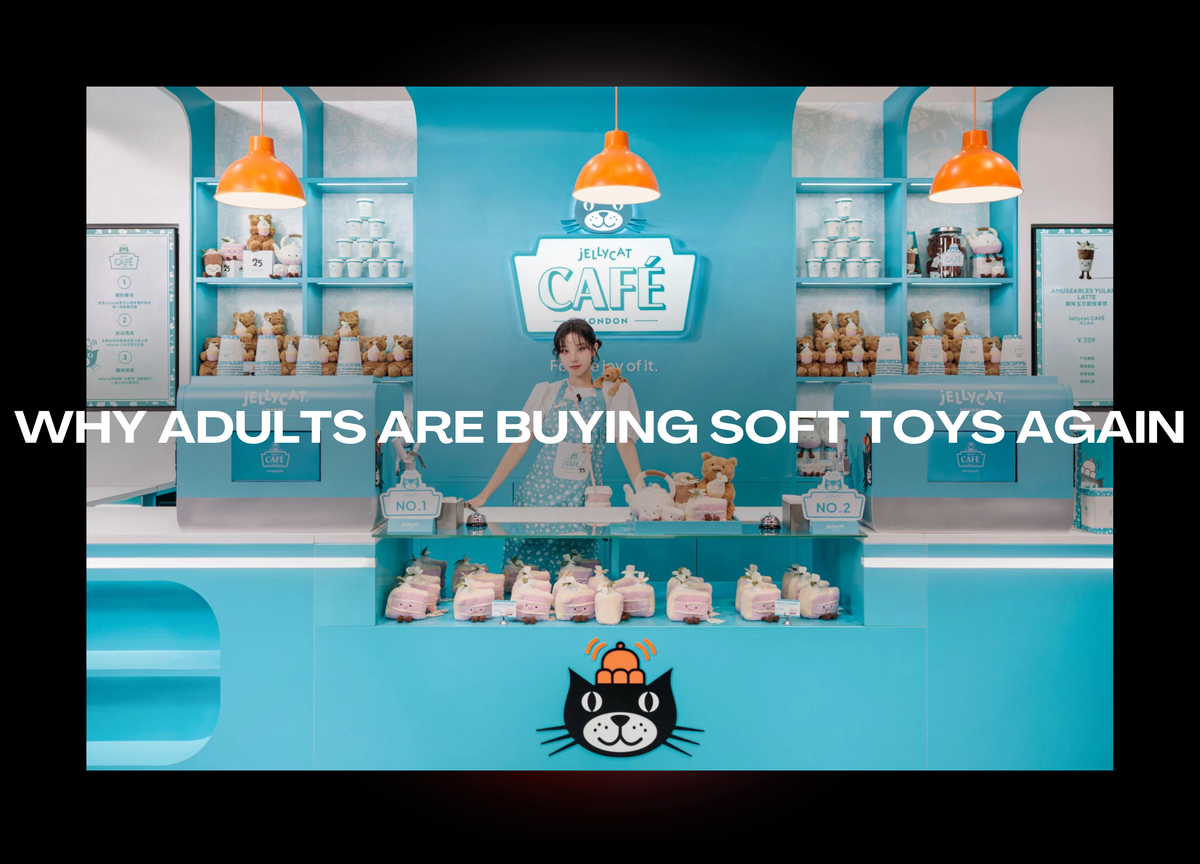
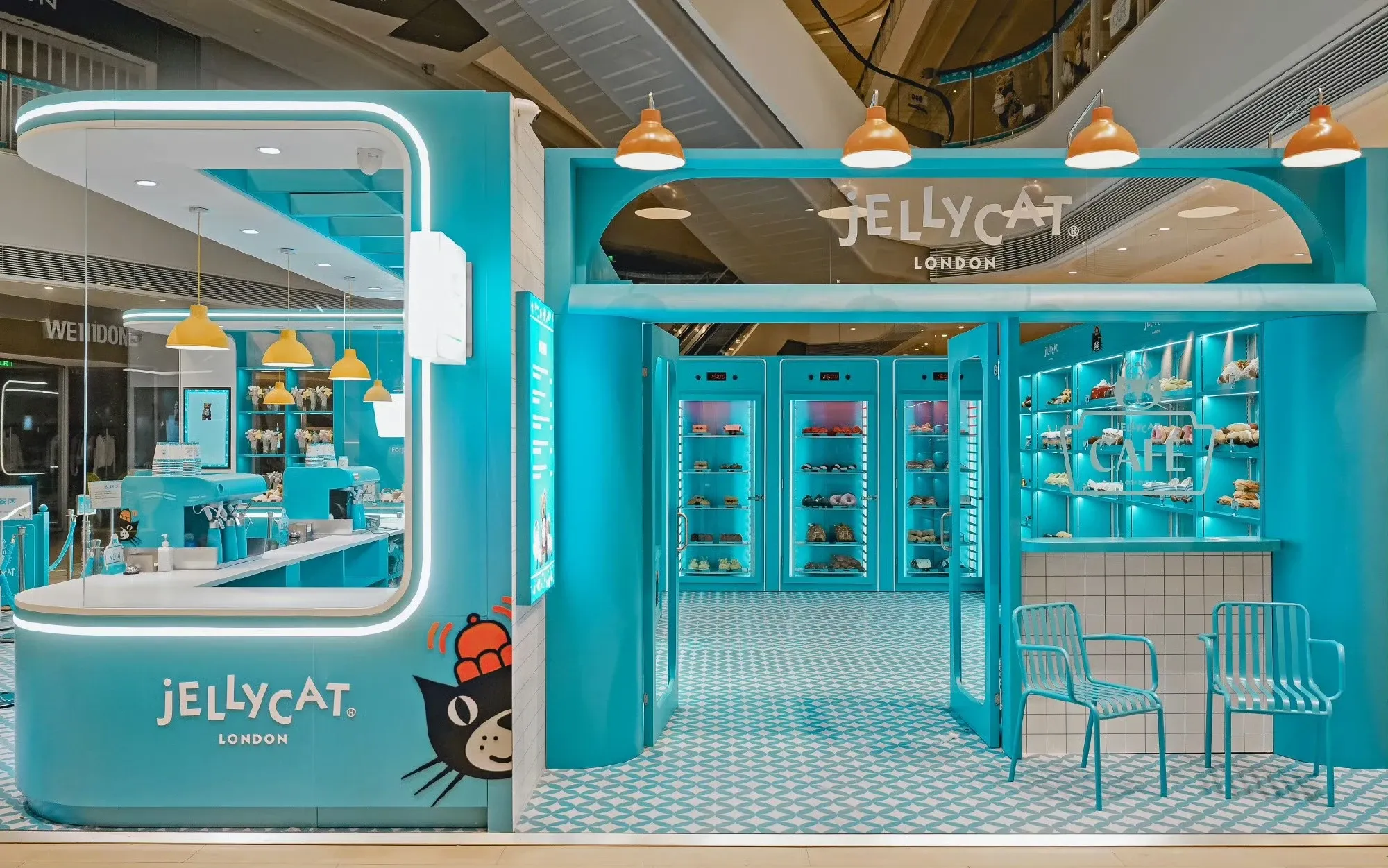
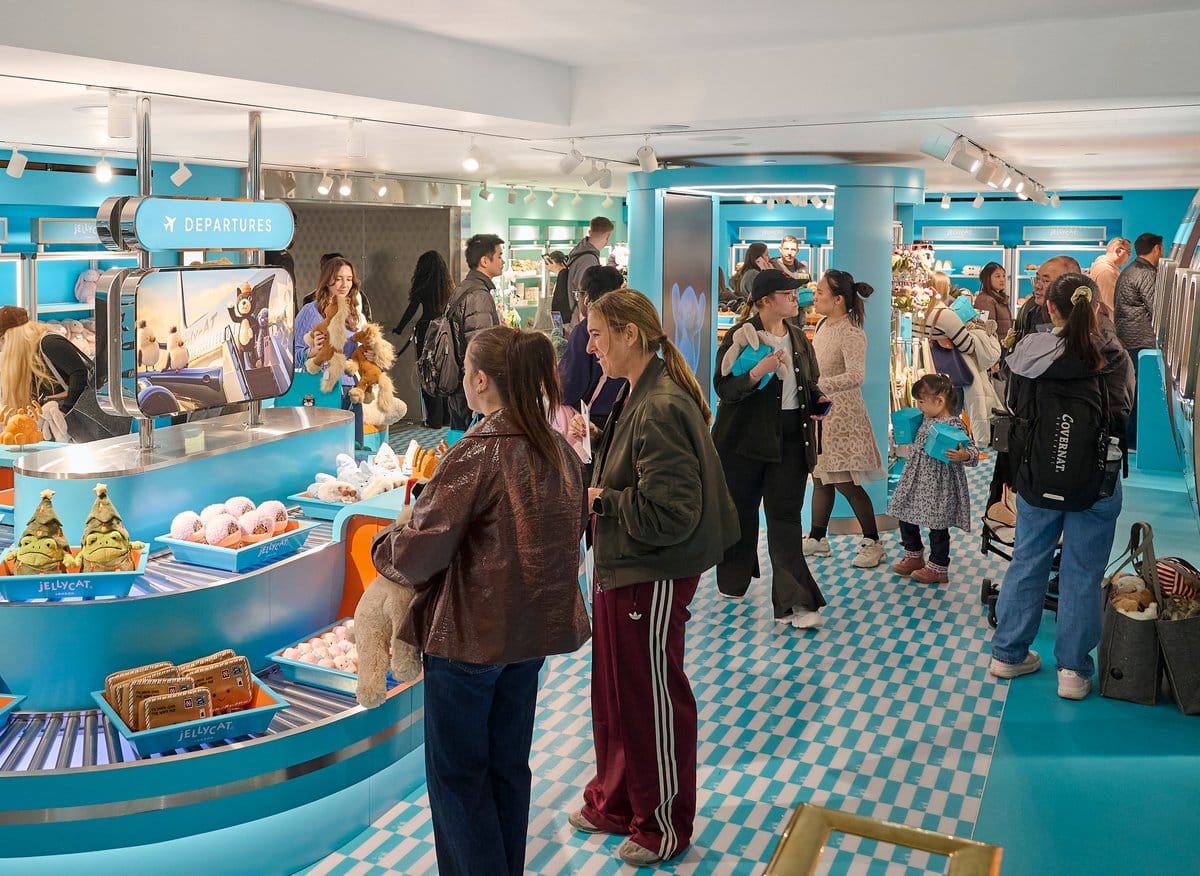
Walk into a high-end department store today and something feels subtly out of place. Among carefully merchandised fashion and curated lifestyle products, you will often find shelves of soft, pastel-toned plush toys. They are not positioned as children’s items tucked away in a corner. Instead, they sit in plain view, styled alongside candles, books, and homeware, as though they belong there.
This shift is not accidental. It reflects a growing demand that has been quietly building over the past few years, one that has now reached a level of commercial scale that is difficult to ignore. The UK-based brand Jellycat has emerged as a central figure in this movement, transforming from a niche toy company into a global cultural force. In 2024, the company generated approximately £333 million in revenue, a dramatic increase from around £200 million the year before. Growth at this scale is rarely driven by a single demographic, yet in this case, the momentum is being fuelled disproportionately by adults.
What appears, at first glance, to be a whimsical retail trend begins to look far more significant when placed in context. The global plush toy market is projected to approach $26 billion by 2033, with increasing participation from adult consumers. In the United States alone, Jellycat recorded growth of over 40% in a category that expanded by just 2% overall. These figures point to more than product-market fit. They suggest a shift in consumer behaviour that extends beyond toys and into the psychological terrain of modern life.
To understand what Jellycat represents, it is necessary to move beyond the product itself and examine the conditions that have made its success possible.
The Rise of Jellycat and the Kidult Economy Explained
The Rise of the Kidult Economy
The growing presence of adults in traditionally child-focused markets has been well documented, but its implications are still not fully understood. Often referred to as the “kidult economy,” this phenomenon describes the increasing tendency for adults to purchase items associated with childhood for their own use rather than as gifts. What was once considered niche or ironic has become both normalised and economically significant.
In the UK, approximately one-third of all toy spending now comes from adults. Globally, adults account for more than one-fifth of plush toy purchases, and among Gen Z, the behaviour is even more pronounced. Surveys indicate that a large majority of younger consumers have bought toys for themselves or for other adults, driven by a combination of nostalgia, emotional comfort, and social influence.
This is not simply a matter of sentimentality. It reflects a broader reconfiguration of adulthood itself. For much of the twentieth century, adulthood followed a relatively predictable trajectory, marked by milestones such as home ownership, marriage, and long-term career stability. These markers provided both structure and a sense of progression.
Today, that structure is far less stable. Economic pressures have delayed home ownership for many. Marriage rates have shifted. Career paths have become increasingly nonlinear. The result is not a rejection of adulthood, but a redefinition of what it looks and feels like.
In this context, consumption patterns are evolving accordingly. Rather than serving as markers of external success, many purchases now function as tools for internal regulation. Products are no longer just signals to others; they are mechanisms through which individuals manage their own emotional states.
Jellycat as a Cultural Object
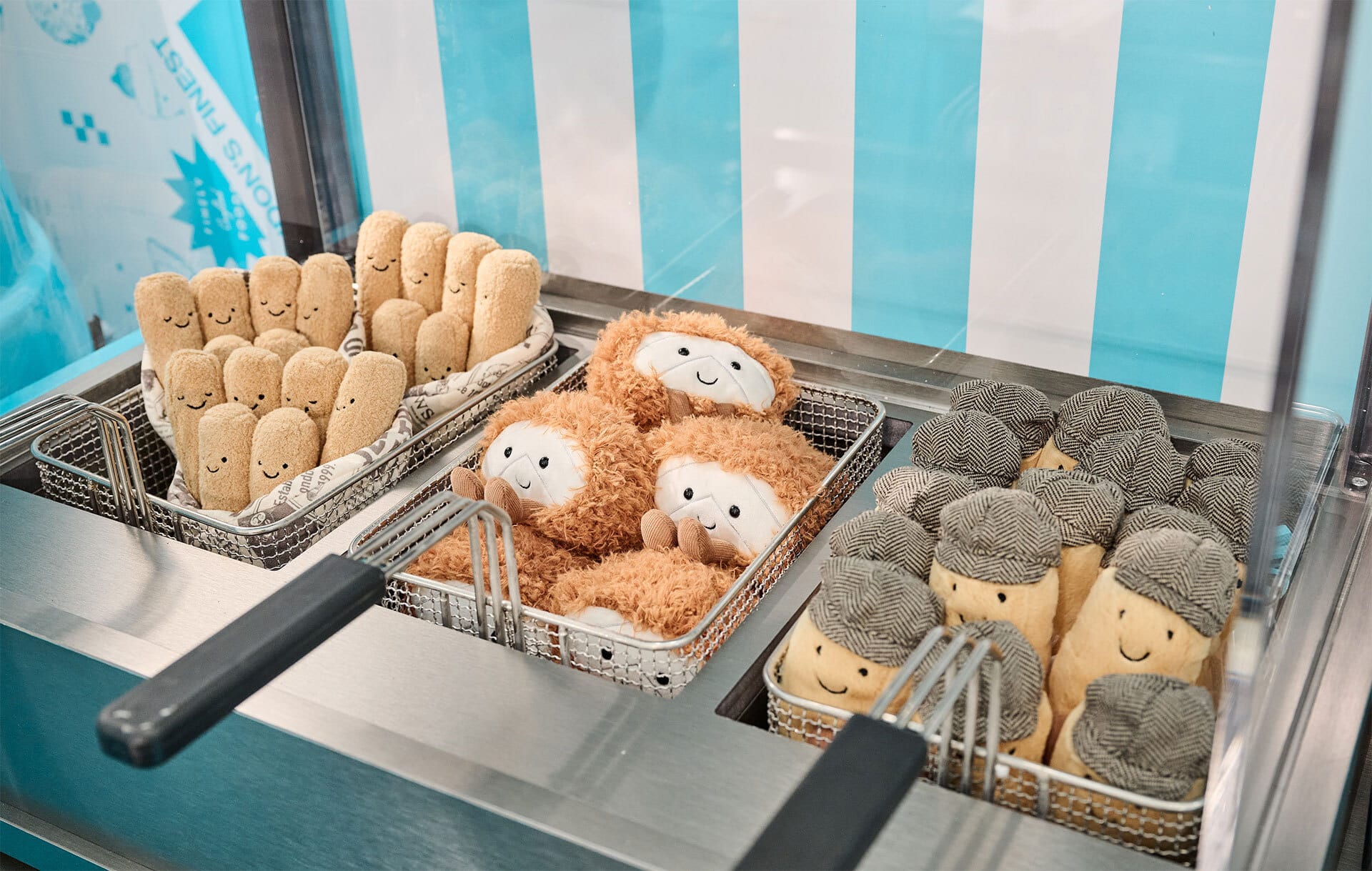
Jellycat’s success lies in its ability to operate at the intersection of product design and emotional resonance. Unlike many toy brands, it does not rely heavily on licensing deals or recognisable intellectual property. Instead, it builds its identity through a distinctive design language that emphasises softness, subtlety, and character without overt branding.
The products themselves are intentionally understated. Muted colour palettes, tactile fabrics, and gently anthropomorphic forms create a sense of calm rather than stimulation. This is a notable departure from the high-energy, visually saturated aesthetics that have traditionally dominated the toy industry.
Pricing further reinforces this positioning. With most items ranging between £20 and £50, and larger pieces reaching higher price points, Jellycat occupies a space that sits comfortably between mass-market affordability and accessible luxury. It is a brand that feels considered rather than disposable, collectible rather than purely functional.
Retail performance reflects this positioning. At major retailers such as Selfridges, Jellycat has become one of the fastest-selling toy brands, with significant year-on-year growth. The brand has also adopted elements of scarcity typically associated with fashion and streetwear, including limited releases and seasonal rotations that encourage repeat purchasing and community engagement.
What emerges is a product ecosystem that functions less like traditional toy retail and more like a lifestyle category. Ownership becomes part of a broader narrative, one that is shaped as much by social media as it is by physical retail.
Comfort as a Form of Consumption
To understand why this category is expanding now, it is necessary to consider the broader emotional climate in which consumers are operating. Over the past decade, a series of overlapping pressures has reshaped how individuals experience daily life. Economic uncertainty, climate anxiety, and the constant presence of digital information have created an environment that is both highly connected and persistently demanding.
Within this context, the role of consumption begins to shift. Historically, consumer culture has been closely tied to aspiration, with products serving as symbols of achievement or status. While this dynamic has not disappeared, it is increasingly being complemented by a parallel form of consumption that prioritises emotional outcomes.
Plush toys sit at the centre of this shift because they offer a form of immediate, tactile comfort that is difficult to replicate digitally. They are simple, predictable, and physically reassuring. Unlike many other forms of consumption, they do not require interpretation or effort. Their value is felt instantly.
This does not mean that consumers are abandoning traditional forms of luxury. Rather, they are expanding the definition of what luxury can be. In an environment where stability feels uncertain, emotional safety becomes a desirable and, in some cases, aspirational state. Objects that facilitate that state take on new significance.
The Role of Social Media in Normalising Softness
The acceleration of this trend cannot be separated from the role of social media, particularly platforms such as TikTok. These platforms have fundamentally altered how products are discovered, contextualised, and shared. They have also played a crucial role in normalising behaviours that might previously have been considered private or unconventional.
Content centred around plush toys, often framed within broader “cozy” or “comfort” aesthetics, has amassed millions of views. Users document their collections, share purchasing decisions, and integrate these objects into their daily routines. What might once have been a personal coping mechanism becomes a visible and socially validated practice.
This visibility is significant. It transforms individual behaviour into collective culture. As more people engage with and share this content, the behaviour becomes self-reinforcing, creating a feedback loop in which visibility drives desirability, and desirability drives further visibility.
For brands like Jellycat, this dynamic provides a powerful amplification mechanism. The products are inherently suited to visual storytelling, allowing them to circulate easily within digital ecosystems that reward emotional engagement and aesthetic coherence.
The Infantilisation of Luxury
At a deeper level, Jellycat’s rise points to a broader shift in the aesthetics and values associated with luxury. Traditionally, luxury has been defined by durability, craftsmanship, and a certain visual rigidity. Materials such as leather, metal, and stone have been central to this definition, conveying permanence and control.
In contrast, the emerging aesthetic associated with brands like Jellycat emphasises softness, impermanence, and emotional resonance. This does not diminish its value; rather, it redefines it. Softness becomes a feature rather than a limitation. Ephemerality becomes part of the appeal.
This shift can be observed across multiple categories. In fashion, silhouettes have become more relaxed, and materials more tactile. In interior design, there is a growing emphasis on comfort-oriented spaces that prioritise warmth and softness. Even in digital design, interfaces are increasingly incorporating rounded forms and more approachable visual languages.
Jellycat can be understood as a concentrated expression of this broader movement. It distils these aesthetic and emotional shifts into a single, highly recognisable product category.
From Ownership to Identity
One of the most significant aspects of this trend is the way in which these products function as extensions of identity. Unlike traditional status symbols, which often rely on widely recognised markers of value, plush toys operate on a more personal level.
Different designs carry different connotations. A particular character may evoke calm, humour, or nostalgia, allowing individuals to curate collections that reflect aspects of their personality. These collections are often displayed prominently, both in physical spaces and in digital content, reinforcing their role as identity markers.
This represents a subtle but important shift in how identity is constructed and communicated. Rather than relying solely on external validation, individuals are increasingly engaging in forms of self-expression that prioritise personal meaning.
What This Signals
When viewed through a broader lens, the rise of Jellycat reveals several interconnected shifts that are likely to shape consumer culture in the coming years.
First, emotional value is becoming a central driver of purchasing decisions. Products that deliver a clear emotional benefit are increasingly able to compete with, and in some cases surpass, those that rely on functional or status-based value.
Second, the boundaries of adulthood are becoming more fluid. As traditional milestones lose their centrality, individuals are constructing new frameworks through which to define themselves, often incorporating elements that would previously have been associated with childhood.
Third, softness is emerging as a form of cultural capital. In a world that often feels unpredictable, the ability to create and maintain a sense of comfort becomes both desirable and, to some extent, aspirational.
What Happens Next
The implications of this shift extend far beyond the toy industry. As emotional consumption continues to grow, it is likely to influence a wide range of sectors.
In retail, environments will increasingly be designed to evoke comfort and ease, with greater emphasis on sensory experience. In luxury, brands may begin to incorporate softer materials and more playful design elements as they respond to changing consumer expectations. In technology, interfaces will continue to evolve toward more intuitive and emotionally engaging forms.
At the same time, the broader cultural implications should not be overlooked. If consumption is increasingly being used as a tool for emotional regulation, it raises questions about the underlying conditions that make such regulation necessary.
Implications for Culture, Brands, and Power
For brands, the key challenge will be navigating this shift without reducing it to surface-level aesthetics. The success of Jellycat is rooted in a genuine alignment between product, positioning, and emotional resonance. Replicating its visual style without understanding its underlying appeal is unlikely to produce the same results.
For investors and strategists, the trend highlights the importance of identifying categories where emotional value is underpriced relative to demand. These categories are likely to offer significant growth potential in the coming years.
For cultural institutions and policymakers, the rise of comfort-driven consumption may serve as an indicator of broader societal pressures. It suggests a need to consider not only economic metrics, but also the emotional conditions under which people are living.
Who Should Pay Attention
This shift is particularly relevant for retailers, luxury brands, investors, and cultural analysts seeking to understand the next phase of consumer behaviour. It also carries implications for policymakers and institutions interested in the intersection of economic conditions and psychological wellbeing.
If softness is reshaping what we consume, how venture capital is shaping cultural taste reveals who is increasingly shaping what we value in the first place. Read here,
 Brad Davidson