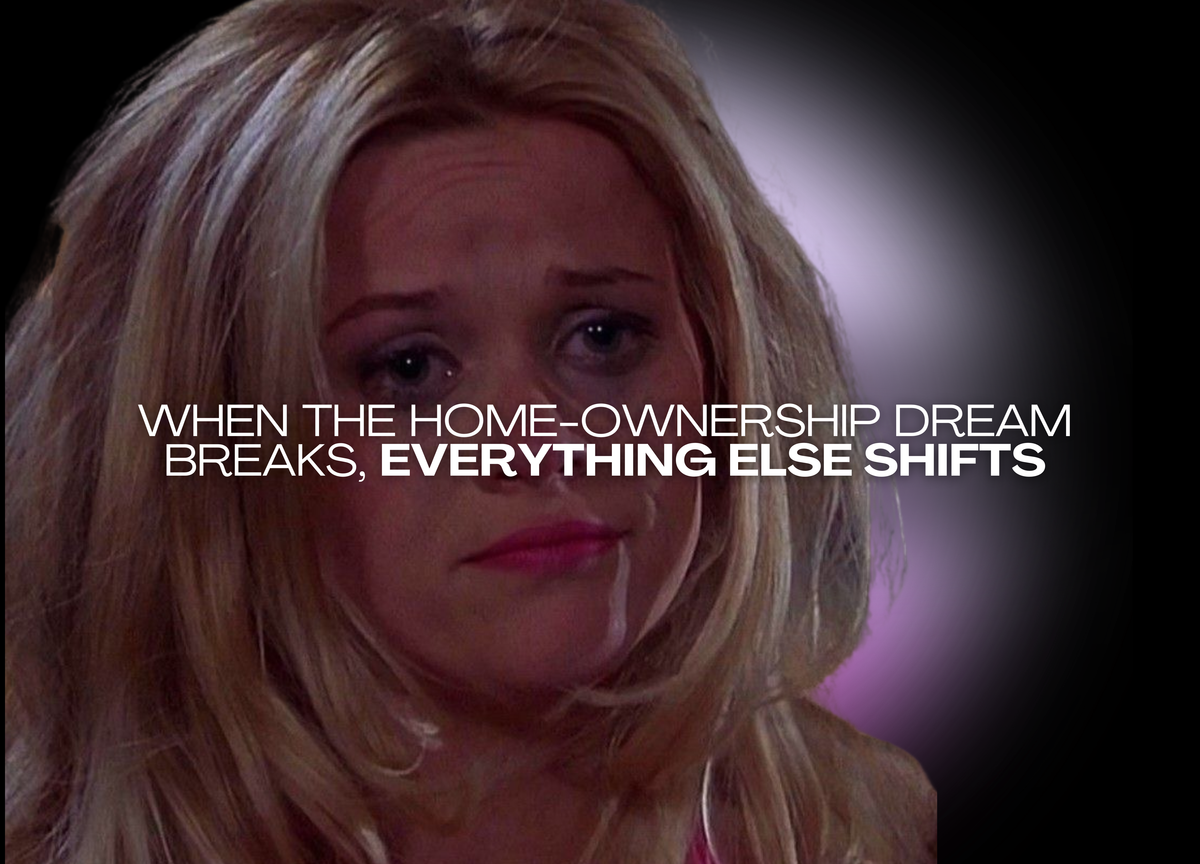
When the Home-Ownership Dream Breaks, Everything Else Shifts
Housing prices are rising far faster than incomes, and a new economic study shows how collapsing home-ownership prospects are reshaping a generation. From reduced work effort to higher spending and riskier investments, young adults face shifting financial behaviours and widening inequality.

For decades, owning a home has been treated as a quiet social contract: work hard, save sensibly, climb steadily, and eventually you’ll place your key into a door that’s yours. It’s more than an economic goal. It’s a cultural marker—proof that you’re rooted, responsible, progressing in life. But what happens when that dream slips out of reach?
A new paper by Seung Hyeong Lee and Younggeun Yoo, titled “Giving Up: The Impact of Decreasing Housing Affordability on Consumption, Work Effort, and Investment,” offers a stark answer: when people no longer believe they’ll own a home, they don’t just change their housing plans—they change their entire approach to life.
The Generational Break: A Declining Path to Ownership
Lee and Yoo’s analysis begins with a sobering projection:
People born in the 1990s are expected to reach retirement with home-ownership rates almost 10 percentage points lower than their parents’ generation.
This isn’t a marginal dip. It’s a generational fault-line. The authors argue that this decline doesn’t merely reduce wealth accumulation—it rewires behaviour. The home-ownership dream has long acted as a guiding star for financial decision-making. When that star dims, people start navigating differently.

When the Goal Disappears, Behaviour Follows
The paper identifies three major shifts that emerge when individuals lose hope of buying a home:
1. They Spend More in the Present
If you don’t think a house is in your future, why scrimp? People consume more today relative to the wealth they have, because the long-term incentive to save becomes weaker.
2. They Work Less Intensely
Work effort drops. If there’s no meaningful payoff waiting—no milestone to grind toward—the motivation to push harder fades. The model shows a measurable reduction in labour supply among those who have “given up.”
3. They Take Riskier Investment Bets
When the stable, traditional path to wealth is blocked, people seek alternatives—often riskier ones. Higher-risk investment patterns appear both in the model and in real-world data from renters with low wealth.
These aren’t small adjustments. They represent a fundamental re-anchoring of personal priorities—a shift from “build a foundation” to “live for now.”

The Long-Term Impact: Growing Inequality and Diverging Futures
Home ownership has historically been one of the most powerful wealth-building mechanisms available to the average person. Losing access to it widens the gap between those who manage to buy and those who don’t.
Lee and Yoo show that these behavioural changes—higher consumption, lower effort, riskier bets—compound over time. The result is greater wealth dispersion: two individuals starting from similar positions can end up on radically different life trajectories depending on whether they still believe home ownership is possible.
The paper paints a clear picture: without intervention, inequality doesn’t just grow—it accelerates.
A Policy Insight with Teeth: Hope Is an Economic Asset
One of the study’s most intriguing insights is what happens when policymakers reintroduce hope into the system.
Lee and Yoo test a targeted housing subsidy designed to lift the largest number of young renters above the “giving-up threshold.” The result?
- It delivers welfare gains over three times higher than a simple universal cash transfer.
- And over ten times higher than a transfer aimed solely at the poorest households.
Crucially, it also boosts work effort and reduces reliance on welfare systems.
The implication is powerful: Policy is not just money—it’s psychology.
Restoring belief in the possibility of owning a home can shift behaviours in ways that improve social and economic outcomes far beyond housing itself.

The Cultural Side: When a Dream Fades, Identity Must Evolve
This research matters because home ownership is more than a line on a balance sheet. It shapes how people think about adulthood, stability, community and success. When large groups lose faith in that path, cultural norms begin to bend:
- Time horizons shrink: The future feels less fixed, so the present becomes more urgent.
- Rootlessness grows: Without a home stake, mobility becomes normal, even desirable.
- Risk becomes identity: With conventional stability out of reach, riskier forms of self-advancement—from crypto speculation to entrepreneurial sprints—become symbolic alternatives to the house-and-garden ideal.
- Generational friction intensifies: Older generations may see “recklessness” where younger generations simply see “realism.”
In other words: losing the dream doesn’t merely change the economy—it changes the culture.

Where We Go From Here
This paper isn’t really about housing. It’s about what happens when a society’s most powerful symbol of progress becomes inaccessible to many.
It raises the questions that will define the next decade:
- What replaces home ownership as the anchor of adulthood?
- How do communities function when fewer people are rooted in place?
- Can policy rebuild belief in the future, not just the financial mechanics of it?
- And what cultural identities emerge in a generation living without the stability their parents took for granted?
At Truffle Culture, we believe the most important shifts in society happen quietly—first in behaviour, then in values, then in culture. This research captures that transition in real time. The home-ownership dream may be fading. But what rises to replace it.