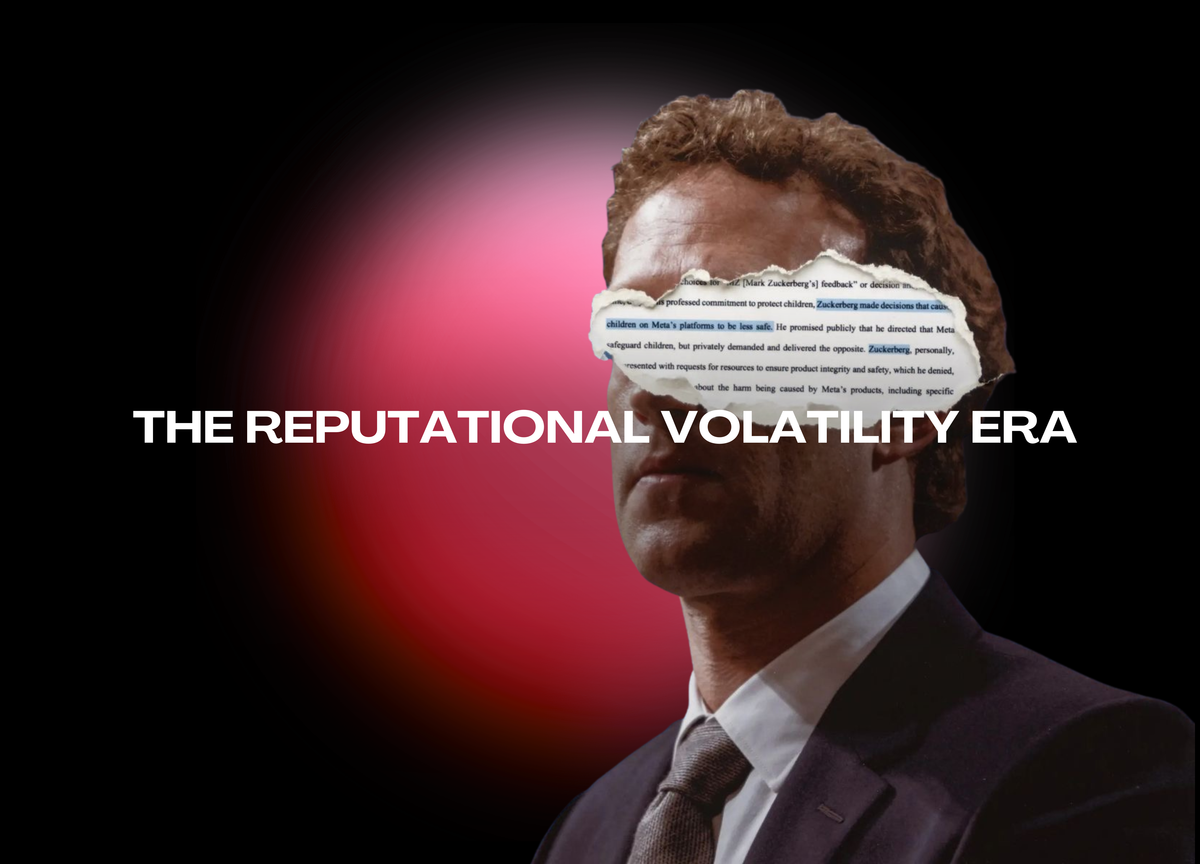
The Reputational Volatility Era
Explore the transition from reactive crisis management to proactive cultural risk mapping. This briefing analyzes why institutional governance now requires real-time foresight to navigate the "Reputational Volatility Era" and how boards use strategic intelligence as insurance.
Why Institutional Governance Requires Real-Time Foresight
The traditional model of corporate reputation management—reactive, siloed, and crisis-driven—is becoming obsolete. We are entering a period of reputational volatility, where the speed of cultural backlash now consistently outpaces institutional decision-making cycles.
In this era, institutions are no longer judged on a single performance metric. They are being evaluated across political, environmental, and ethical axes simultaneously, creating a multidimensional risk environment that demands a new level of cultural fluency.
The Signal: Accelerated Backlash Cycles
Public sentiment, once slow to gather momentum, now crystallizes in hours. This is driven by a live, digitally-native ecosystem where information and outrage travel without friction. When a signal of misalignment occurs—whether a policy shift or a marketing misstep—it is instantly amplified across global networks, reaching economic and cultural hubs from London to São Paulo.
The acceleration is not merely a byproduct of social media speed; it is the result of a generational realignment. A new class of culturally engaged participants is holding power to account, treating brand and institutional behavior as a reflection of personal ethics.
What is Forming: Permanent Scrutiny as Structural Reality
We are moving away from "event-based" crises toward a state of permanent scrutiny. In this new reality, scrutiny is not an occasional hurdle but a structural constant of the operating environment.
Institutions often struggle because they treat cultural change as "content" to be managed rather than a "system" to be understood. While traditional market research captures what has already matured, it fails to see the patterns forming beneath the surface. This creates a dangerous "visibility gap" where leadership teams are blind to emerging shifts until they have already reached the mainstream.
Strategic Implications: Cultural Risk Mapping as Core Governance
As volatility increases, cultural risk mapping must transition from a communications function to a core governance requirement.
• Foresight as Strategic Insurance: Intelligence is no longer a luxury for innovation teams; it is the primary mechanism for strategic preservation.
• Narrative Translation: Complex policy and institutional research must be translated into culturally resonant narratives to survive the friction of public discourse.
• Early Signal Infrastructure: Success in this era requires "embedded" intelligence—accessing signals directly from the source rather than purchasing retrospective data.
The Trajectory: The Rise of the Foresight-Led Board
The final evolution of this shift will see Boards of Directors demanding structured visibility into cultural formation. Governance will move toward a model of informed action, where long-term decisions are supported by real-time feedback loops and early pattern detection.
Organizations that fail to build this infrastructure will remain reactive, trapped in a cycle of defensive maneuvers. Those that adopt a foresight-led approach will gain a structural advantage, navigating systemic change with clarity rather than hesitation.