Looking at Art Increases Meaning in Life, New Research Finds
Psychological research shows that viewing visual art increases meaning in life, a core driver of long-term wellbeing. Art is not a luxury, but a measurable psychological resource that shapes how people interpret experience and their place in the world.
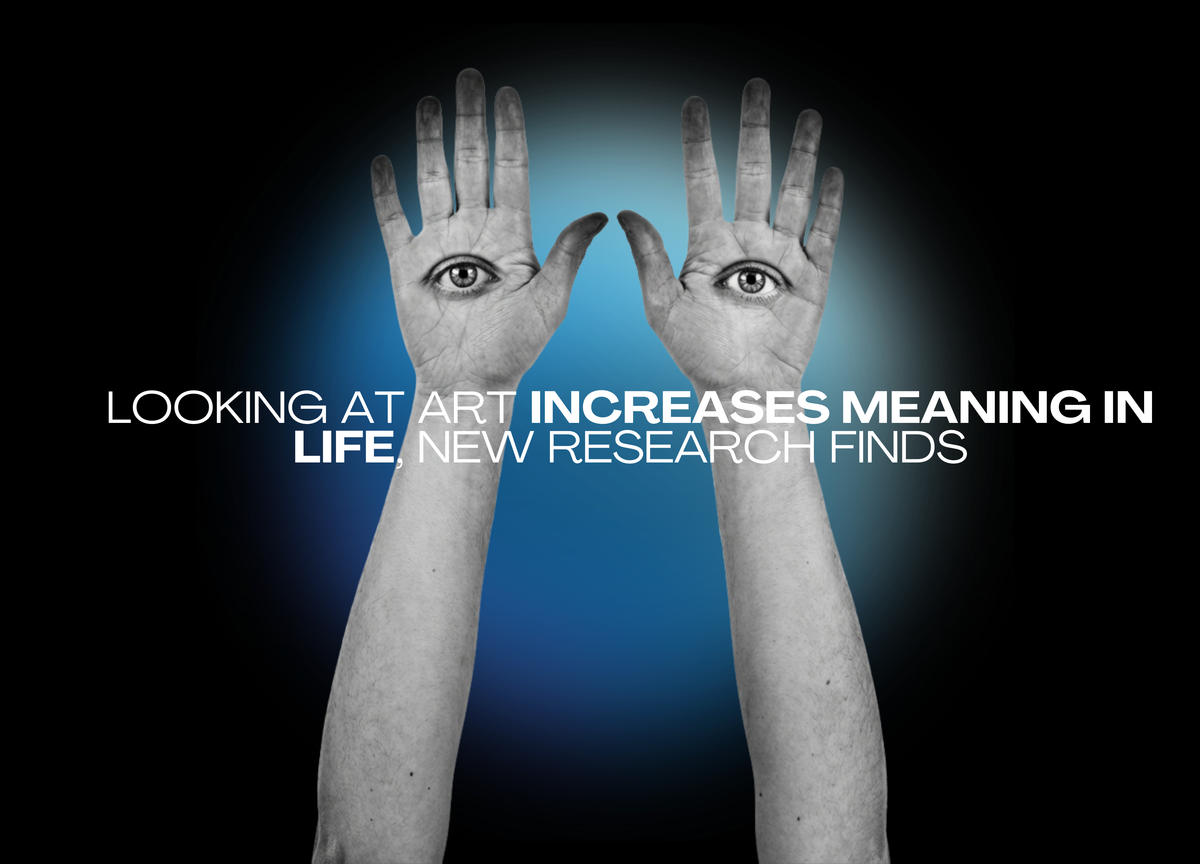
Viewing Art Increases Meaning in Life, According to Psychological Research
For years, wellbeing has been framed as a technical problem. Measure stress. Reduce symptoms. Optimise habits. But a growing body of psychological research is pointing toward a quieter, more foundational truth: wellbeing is not only about feeling better. It is about finding meaning.
A newly published systematic review in The Journal of Positive Psychology brings that truth into sharp focus. Drawing together decades of fragmented studies, the researchers examined a deceptively simple activity: looking at visual art. Their conclusion is unambiguous. Viewing art reliably increases people’s sense of meaning in life, which in turn supports overall psychological wellbeing.
This is not a poetic interpretation layered onto the data. Meaning is the central variable.
What the Research Actually Shows
The review synthesised 38 empirical studies involving more than 6,800 participants across different countries, age groups, and settings. Participants engaged with visual art in museums, hospitals, public spaces, laboratories, and digital environments. The artworks ranged from classical paintings to contemporary abstract forms.
Across these contexts, the psychological effect was consistent. Viewing art was associated with increases in eudaimonic wellbeing — the dimension of wellbeing linked to purpose, personal growth, and life meaning rather than pleasure or mood alone.
Crucially, the studies showed that art does not simply make people feel calmer or happier in the moment. It activates reflective processes. Viewers interpret, connect, question, and situate themselves within something larger than their immediate concerns. Meaning emerges not as a side effect, but as the mechanism.
Meaning, Not Mood, Is Doing the Work
This distinction matters. Much of modern wellbeing culture is built around hedonic optimisation: reducing discomfort, increasing positive affect, smoothing emotional edges. The research reviewed here suggests something different is happening with art.
When people look at art, they are not distracted from their lives. They are invited back into them with greater coherence. Ambiguity is tolerated. Complexity is held. Emotional responses are integrated rather than resolved.
In psychological terms, this is meaning-making. And meaning-making is one of the strongest known buffers against anxiety, burnout, and existential distress.
At a time when mental health interventions are often evaluated by speed and scalability, this research highlights an undervalued resource: experiences that deepen interpretation rather than eliminate difficulty.
Art as a Public Wellbeing Infrastructure
One of the most significant implications of the review is where these effects occur. Benefits were observed not only in galleries, but in hospitals, clinical environments, and virtual settings. This challenges the idea that art’s psychological value is tied to cultural capital or specialist knowledge.
Art functions as a cognitive and emotional interface. It does not require training to be effective. It requires attention.
This reframes visual art as a form of public wellbeing infrastructure. Not decoration. Not enrichment. But a low-cost, accessible means of supporting psychological resilience by restoring people’s relationship with meaning.
Why This Signal Matters Now
The timing of this research is not accidental. Across cultures, there is a growing recognition that wellbeing strategies centred on productivity, optimisation, and self-management are failing to address deeper forms of distress.
Meaning has quietly re-entered the conversation. Not as a spiritual abstraction, but as a psychological necessity.
This review positions art as one of the most reliable, under-leveraged tools for cultivating meaning at scale. In doing so, it exposes a cultural blind spot. We have invested heavily in systems that regulate behaviour, while neglecting those that help people understand themselves.
What This May Lead to Next
If these findings are taken seriously, we are likely to see:
- Greater integration of art into healthcare and mental health environments
- A shift in wellbeing policy toward meaning-based interventions
- Increased interest in cultural experiences as preventative mental health tools
- A revaluation of public art as social infrastructure rather than aesthetic surplus
Implications for Culture, Brands, and Power
Culture
Art’s value is not symbolic. It is psychological. Cultural participation supports mental health by restoring interpretation, not by offering escape.
Brands
Experiences that create space for reflection, ambiguity, and emotional resonance will increasingly outperform those optimised purely for attention.
Power
Institutions that control public space shape public wellbeing. Investing in art is not a cultural gesture. It is a structural one.
Who Should Pay Attention
- Mental health practitioners exploring non-clinical interventions
- Policymakers designing preventative wellbeing strategies
- Urban planners and architects shaping shared environments
- Cultural leaders seeking evidence for art’s societal value
The research is clear. Meaning is not optional. And art remains one of the most effective ways humans have found to create it.