Gen Z, Task Masking and the Collapse of Productivity Theatre
Is your Gen Z workforce actually productive or just 'Task Masking'? Discover why 'Productivity Theater' is rising in 2026 and how to pivot to an impact-first culture.
Gen-z and the Performative Logic of Work as a Cultural Response to Value Extraction in the Post-Pandemic Workplace
In 2025, a curious workplace phenomenon crossed from HR jargon into the cultural zeitgeist. A behavior labeled “task masking”—the art of looking busy rather than being productively engaged—went viral across TikTok, employee forums, and mainstream media. Originally used to describe young workers adopting superficial activity (loud typing, "calendar theater," and exaggerated digital presence) to signal productivity under managerial scrutiny, the term has become a lightning rod for a much deeper conversation.
Beyond the meme-able aesthetics of "the mouse jiggler," task masking points to a profound cultural transformation. It reframes how work is experienced, evaluated, and performed in a world where visibility no longer reliably indicates value.
What the Behavior Signals
1. A Rupture in the Productivity Contract
Traditional workplace norms equate visible effort with value delivered. In the post-pandemic era, this logic has faltered. Generation Z, having entered a workforce defined by precarious labor markets and remote dynamics, prioritizes output over hours. Task masking is rarely about laziness; it is a coping mechanism in environments that still reward optics more than outcomes.
2. Shifting Generational Norms
Gen Z’s workplace expectations differ sharply from their predecessors. Statistics from recent Deloitte studies indicate that nearly 50% of Gen Z and Millennials feel burned out, with many prioritizing work-life balance and autonomy over traditional hierarchy. Task masking reveals the friction between "Old Guard" managerial logics (presence) and "New Guard" worker logics (impact).
3. The Surveillance Side-Effect
As return-to-office (RTO) mandates surge, so does digital monitoring. Research suggests that 2025's RTO pressures drive surface-level engagement rather than real innovation. When workers feel constantly measured by keystrokes rather than ideas, the ritual of "looking busy" becomes a defensive necessity.
4. A Symptom of Disengagement
Gallup data consistently shows that only about 30% of workers feel actively engaged. Task masking is visible proof of a mismatch between intrinsic motivation and organizational incentives. If the "why" of the work is missing, the "how" becomes a performance.
Cultural Implications: The Deeper Reveal
• The Collapse of Performance Signaling: Work is no longer a linear story of tenure and face time. Visibility has decoupled from value.
• Optics Over Ontology: If looking busy is more observable than being creative, we enter a reality where the proxy for work becomes the work itself.
• The Renegotiation of the Psychological Contract: For Gen Z, work is a domain of negotiation—less hierarchical and more contingent on mutual trust. Task masking is a mirror reflecting how workers feel unheard.
• Platform-Mediated Culture: The term itself was amplified by social media, proving that the boundary between "corporate culture" and "online culture" has dissolved.
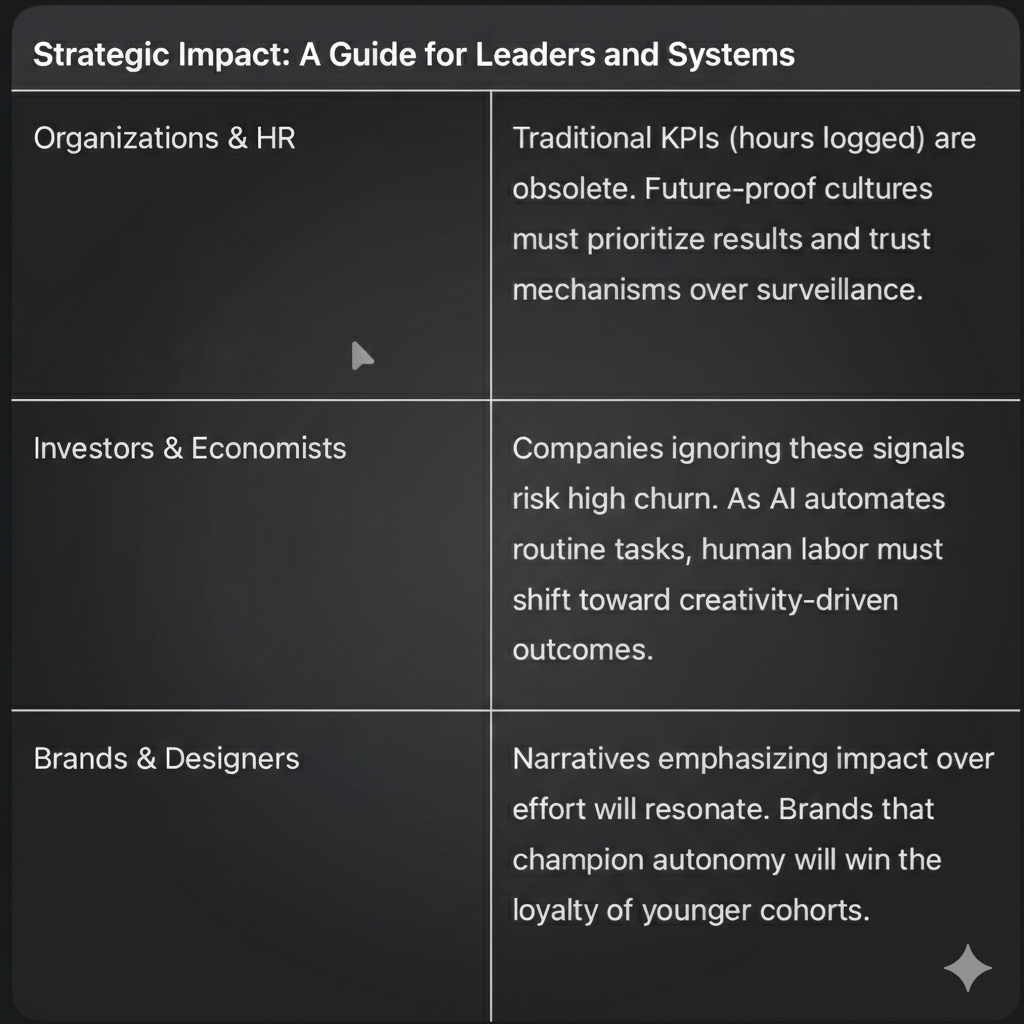
Who Should Pay Attention?
• Cultural Strategists: This signal anticipates the next phase of work—where old metrics die and fresh cultural logics emerge.
• Policy Makers: If engagement is decoupled from visibility, labor frameworks must evolve to protect worker agency and psychological safety, not just contractual hours.
What Comes Next: From Optics to Outcomes
We are witnessing a cultural shift away from "activity signaling" toward meaningful contribution. Task masking may eventually fade as performance measurement evolves, but the underlying pressures—insecurity and surveillance—will persist until organizational incentives shift.
The pandemic’s legacy—autonomy and agency—has reshaped expectations irreversibly. Work is no longer a stage where busyness earns an applause; it is a domain where impact is the new currency.