Culture Is Abandoning the Public Feed
Public feeds once defined cultural relevance. Now the real signal is elsewhere. Messaging platforms, closed networks and paid communities are quietly reshaping how influence is built and trust is earned.
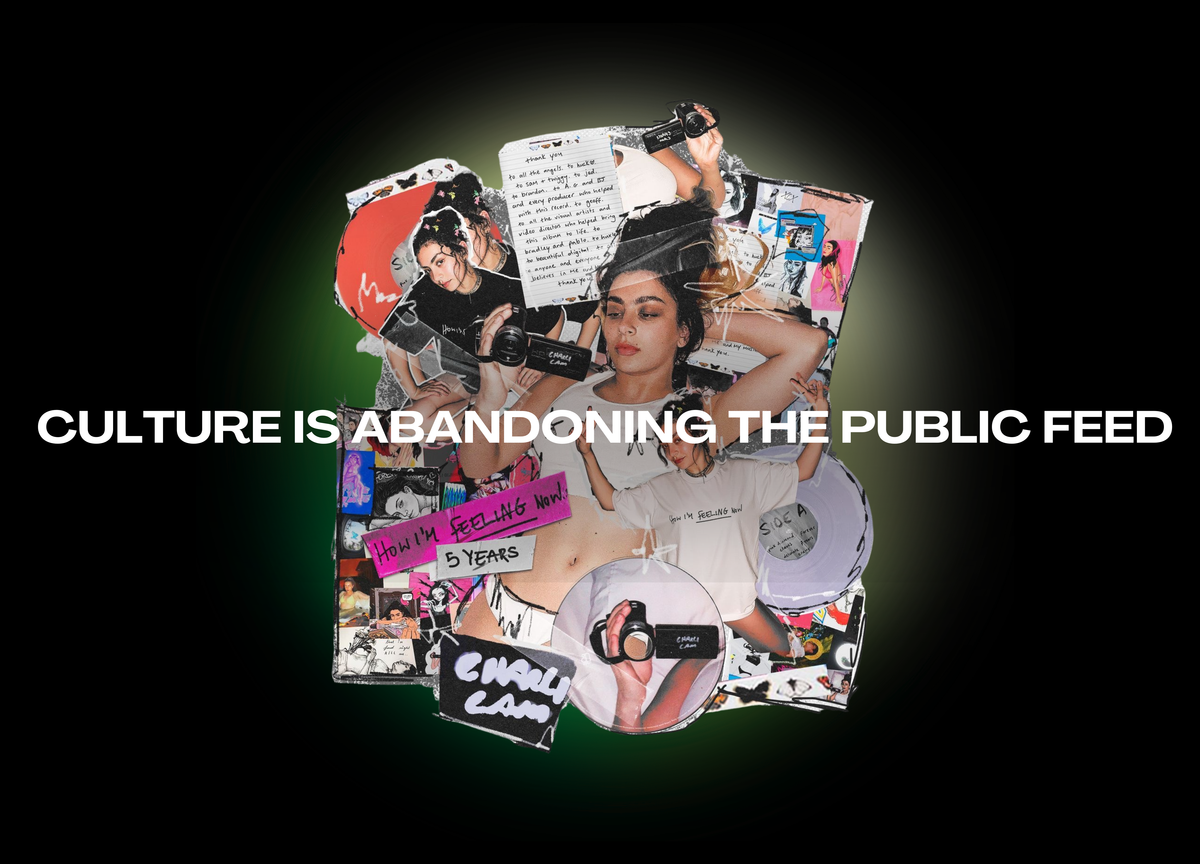
Cultural authority is moving from mass visibility to closed networks, reshaping how power, trust, and influence are built.
Culture used to be a river. Broadcast platforms and public feeds carried ideas wide and fast. Today the river is splintering into streams, tributaries, and hidden pools. A new ecology is forming: private channels, closed communities, paid newsletters, and topic-first servers where trust is earned in small rooms rather than broadcasted to the crowd. This is not nostalgia. It is a structural reordering of where meaning, authority, and cultural capital are produced.
How Is the Shift from Public Feeds to Private Channels Reshaping Cultural Influence?
The data that changes the story
- Messaging is the dominant mode of use, not an add-on. Recent national surveys show messaging apps are used by an overwhelming majority of people across markets. In the UK, WhatsApp reached usage levels above 90 percent of adult smartphone users in 2025, which underlines how conversation is moving off public feeds and into persistent private channels. . Ofcom
- Public platforms remain large, but growth sits with private-first networks. By 2025 Telegram and other messaging-first services reported explosive user growth, with Telegram crossing the billion-user threshold as communities and channels scaled rapidly. At the same time Discord and similar platforms are not niche experiments but major social infrastructure for topic-led communities. These platforms are no longer peripheral. They are central nodes for cultural formation. . Telegram Discord
- Creators and readers are monetising selective attention. The revival of paid, direct subscription models and lightweight publishing tools means creators can move a core audience into private distribution without sacrificing revenue. Platforms designed for newsletter-first discovery report steady improvements in creator analytics and conversions, making closed distribution economically viable. . Substack
- The psychology of private rooms matters. Academic and policy literature increasingly documents that people, especially younger cohorts, favour controlled spaces for candid exchange and emotional safety. The move toward private groups, small servers, and broadcast channels is linked to privacy concerns, mental health anxieties, and a desire for deliberate curation of who gets to shape your attention. . Pew Research Center
- Attention is concentrated, influence is atomised. What previously required mass reach now often succeeds through dense networks of influence. A 1,000-strong niche community that pays or engages regularly can deliver higher signal-to-noise value than a 100,000-strong public audience that scrolls past. The commercial consequences are profound for institutions that still think only in impressions.
What is actually happening, in plain terms
A few forces reinforce each other. Public feeds have become more commercial and algorithmically noisy. People are fatigued by spectacle and surveillance. At the same time tools that enable private, paid, or opt-in communities have matured. The result is simple: the places where people form durable cultural meanings are shifting from mass public channels to community-first, permissioned spaces.
This is not fragmentation for its own sake. It is a reallocation of cultural authority away from generic reach toward crafted relational capital. Trust becomes a scarce resource. Access becomes a signal of status. The psychological cost of being public is rising, while the value of being intentionally private is growing.
Why this matters for institutions and brands
- Influence is no longer measured only by scale. Institutions that prize reach above relational depth will fall behind. Small, engaged communities can move behaviour, fundraising, adoption, and lobbying more efficiently than broadcast campaigns.
- Messaging strategy must become membership strategy. Institutions will need to design for belonging. That means shifting budgets and creative energy away from one-to-many splash moments and toward one-to-few pathways that cultivate trust over time.
- Transparency and authority must be re-earned in closed rooms. Young audiences distrust faceless institutions but will follow credible, transparent experts who operate with humility and depth. Authority in private spaces is fragile and requires ongoing epistemic generosity.
The Truffle Culture take: a tight foresight
Signal: Cultural power is migrating from public broadcast to private, community-first spaces where trust, curation, and membership matter more than impressions. The infrastructure shift is measurable. Messaging platforms and closed servers account for substantial new user growth and active engagement, and paid-subscription publishing is proving an effective economic model for creators. .
Implication 1: Brands that continue to operate as broadcasters will become noise. The cultural advantage will accrue to actors who design closed experiences that feel exclusive but are genuinely valuable.
Implication 2: Cultural gatekeepers will decentralise. Trusted curators, micro-publishers, and community leaders will act as new intermediaries between institutions and publics. Institutions must learn to partner, not just command.
Implication 3: The metrics change. Depth of engagement, retention, cross-share rates, and monetised conversion will outperform vanity reach metrics. Budgets must be reallocated accordingly.
What this signal may lead to next
Expect a hybrid ecosystem: public platforms will remain discovery surfaces while private channels become conversion and incubation layers. We will see more orchestration across public and private touchpoints: public teasers, private deep-dives, and monetised membership for institutional clients and superfans.
Implications for culture, brands and power
Culture will decentralise from platform captains to a constellation of specialised communities. Brands able to design meaningful membership will accumulate disproportionate cultural influence. Power will shift to those who can translate institutional credibility into intimate, practice-driven communities.
Who specifically should pay attention
- Foundations and NGOs that need long-term trust to mobilise supporters.
- Cultural institutions and museums that must convert casual visitors into repeat members.
- Policy teams and public institutions that require legitimacy in niche constituencies.
- Consumer brands that can productise membership and exclusive access.
- Corporate comms and investor relations teams who need to build durable relationships, not headlines.