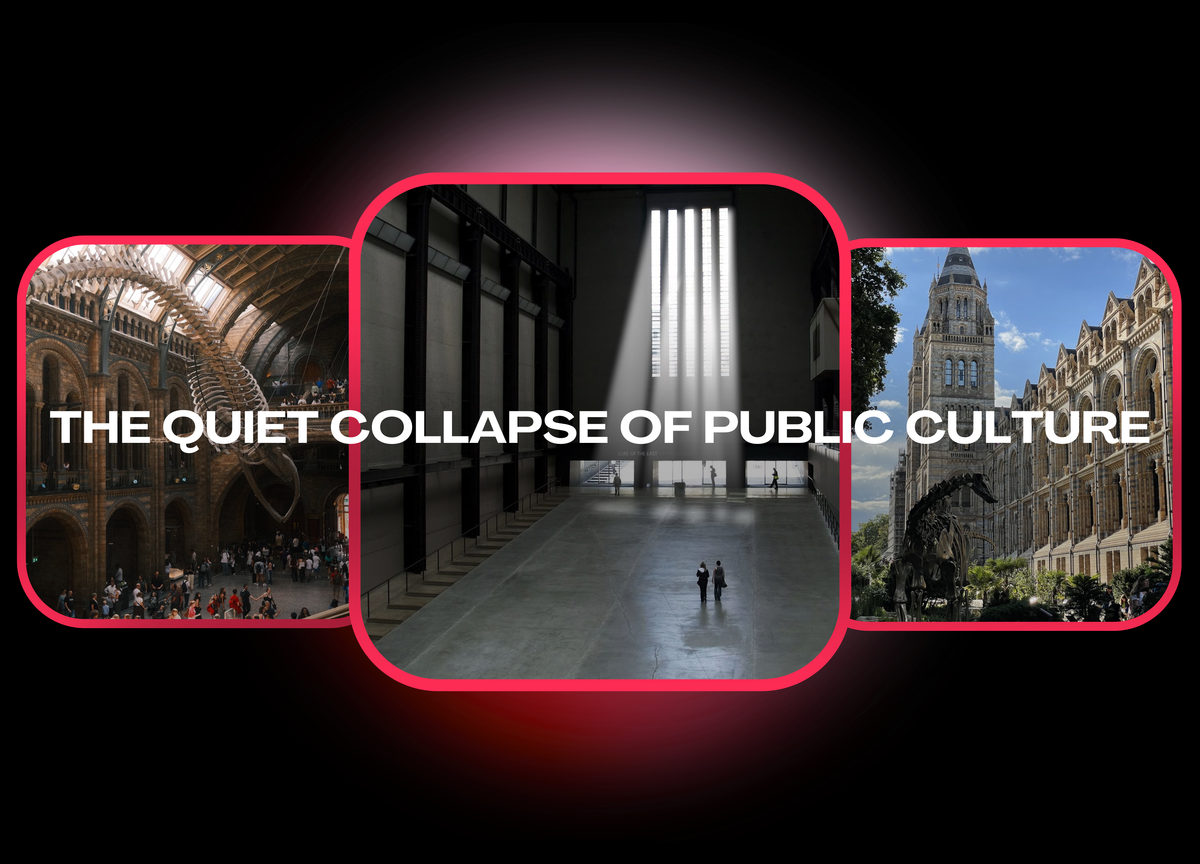
The Quiet Collapse of Public Culture
London’s museums were built on the promise of free access for all. But beneath record visitor numbers, a new inequality is emerging. As funding shifts and private capital rises, public culture is being quietly reshaped.
The Hidden Inequality Inside London’s Museums
In London, culture has long been positioned as a democratic right. The city’s great museums, from the British Museum to the National Gallery, were designed as civic spaces where knowledge, beauty, and history could be accessed freely, regardless of background. For decades, this model has been held up as a quiet triumph of public policy. Free entry, introduced across national museums in 2001, transformed the cultural landscape, dramatically expanding access and positioning London as one of the most open cultural capitals in the world.
Yet beneath the surface of record visitor numbers and global prestige, a different story is unfolding. London’s museum ecosystem is no longer operating as a unified public infrastructure. It is fragmenting into two distinct realities, shaped not by curatorial vision or public mission, but by the same economic forces redefining the city itself. What is emerging is not simply a funding crisis, but a structural realignment in which culture is increasingly organised around capital, visibility, and scale.
The result is a system that appears, at a glance, to be thriving, yet is becoming progressively more unequal.
Why London’s Museums Are Facing a Growing Funding Crisis
The Rise of the Global Museum
At the top of this emerging hierarchy sit London’s flagship institutions, whose scale and visibility position them less as museums in the traditional sense and more as global cultural platforms. The Natural History Museum now attracts over seven million visitors annually, making it one of the most visited attractions in the country. The British Museum and National Gallery continue to draw millions more, functioning as anchor points within both the tourism economy and Britain’s soft power strategy.
These institutions benefit from a powerful convergence of forces. Their central locations place them firmly within London’s tourist geography, while their collections hold global cultural significance, attracting international audiences and philanthropic interest. Their scale enables diversified revenue streams, from retail and events to corporate partnerships and touring exhibitions. Crucially, they are also the primary beneficiaries of donor capital, which increasingly plays a decisive role in shaping the future of cultural infrastructure.
In this context, the “museum” begins to shift in meaning. It is no longer solely a site of preservation and education, but a hybrid space that blends culture with experience, commerce, and global branding. Visitors do not simply attend exhibitions; they participate in curated environments designed to compete within the broader attention economy.
This transformation has allowed flagship institutions to maintain a veneer of stability, even as the underlying economics of the sector grow more precarious. Yet this stability is not evenly distributed. It is contingent on scale, visibility, and access to capital, factors that are not available to the majority of institutions operating within the same ecosystem.
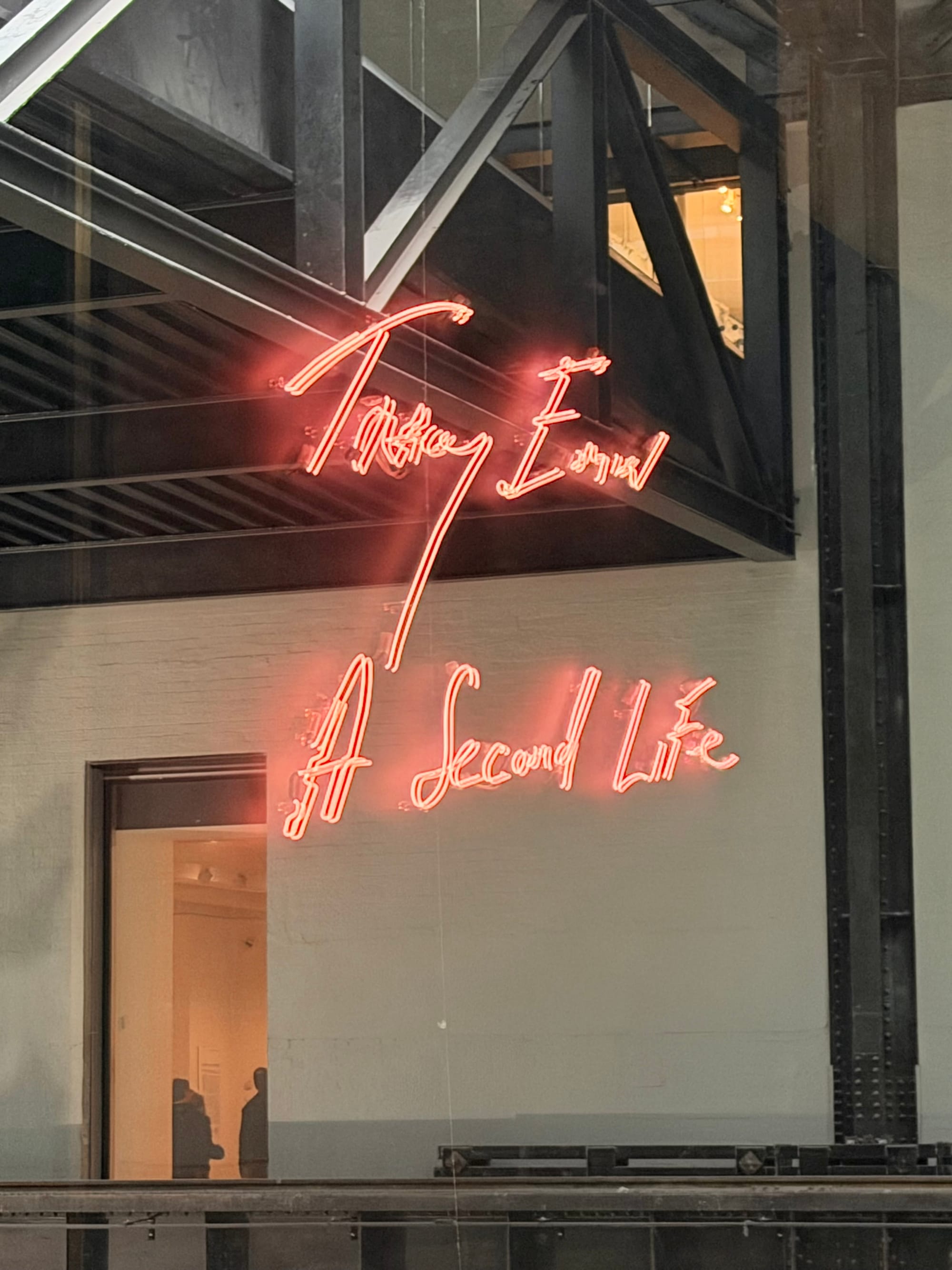
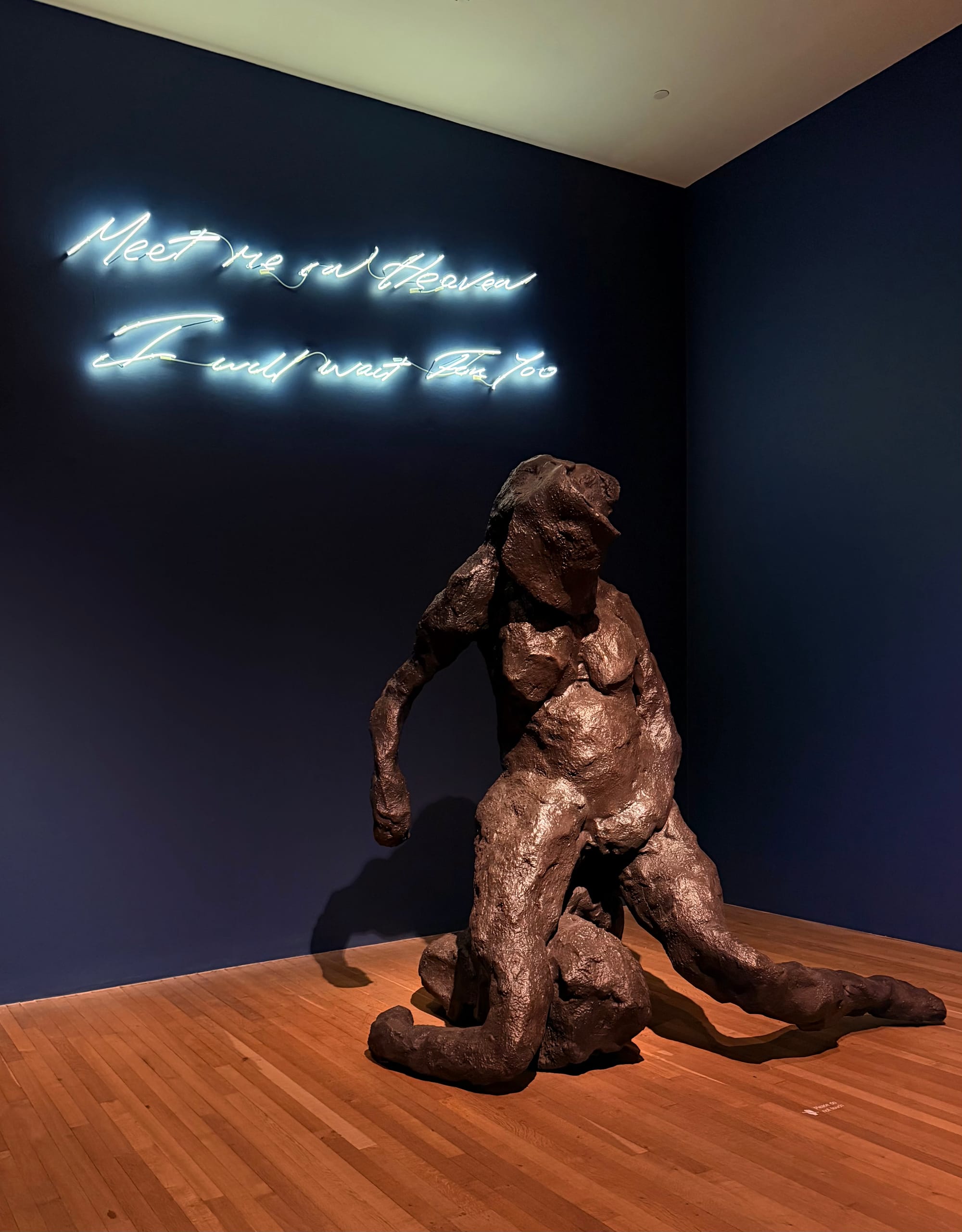
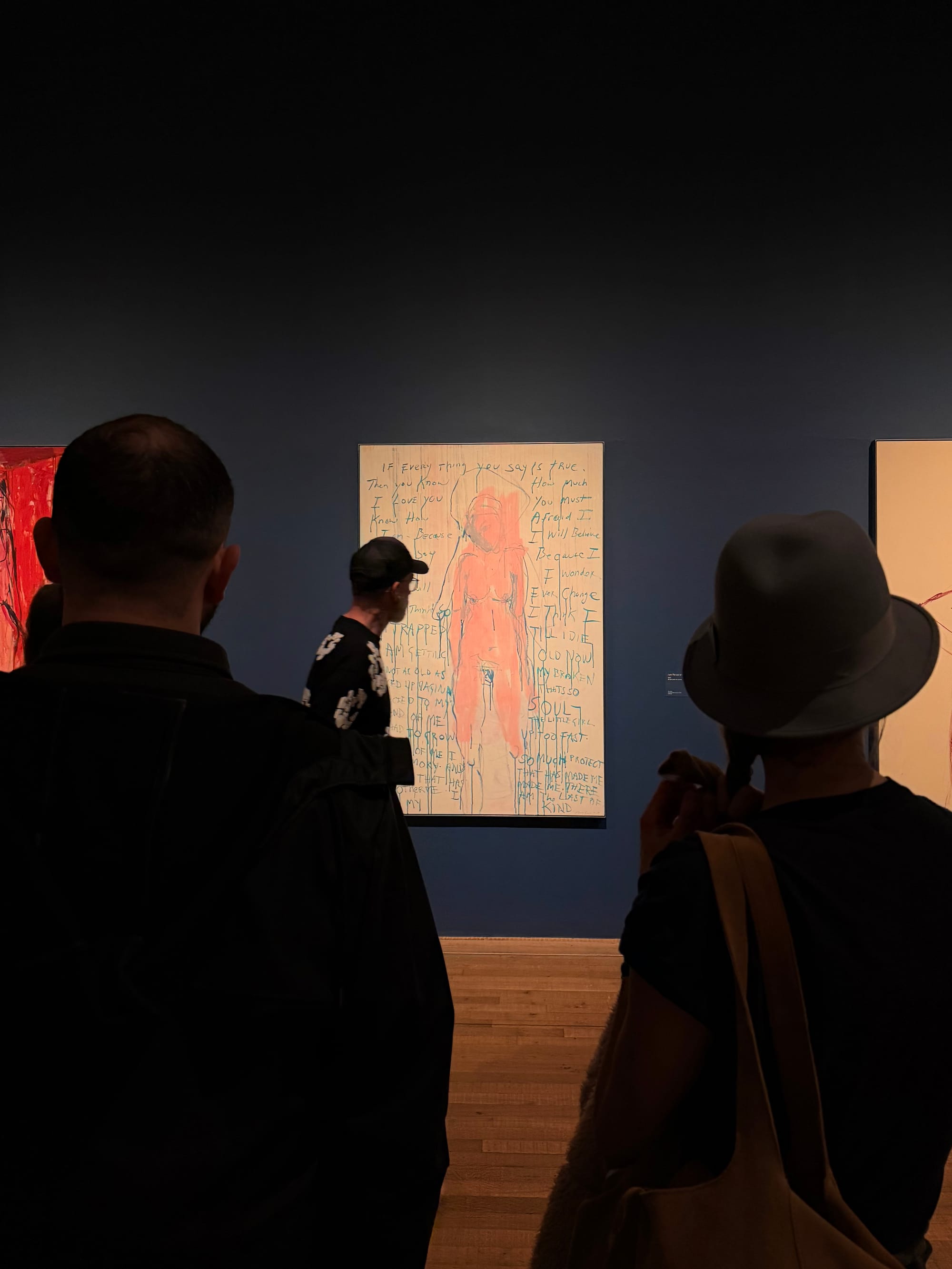


Tracey Emin - A Second Life - Tate Modern - Credit: Brad Davidson
The Fragile Cultural Layer
Beyond the major institutions lies a far more fragile landscape, composed of local museums, specialist collections, and community-led spaces that form the connective tissue of Britain’s cultural identity. These institutions rarely attract international tourists or major donors. Instead, they rely on a combination of public funding, local engagement, and volunteer support, all of which have come under increasing strain in recent years.
Data across the sector points to a worsening financial position. More than half of UK museums report being in a weaker financial state than they were three years ago, while rising operational costs, from energy to staffing, continue to outpace income. Volunteer numbers remain below pre-pandemic levels, and many institutions have been forced to reduce opening hours, cut programmes, or consider closure altogether.
What distinguishes this layer is not a lack of cultural value, but a lack of economic leverage. These museums serve highly localised audiences, preserve niche histories, and contribute to social cohesion in ways that are difficult to monetise. Their value is civic rather than commercial, yet it is precisely this characteristic that renders them vulnerable within an economic model increasingly oriented toward scale and return.
The divide that emerges is not simply one of size, but of function. While flagship institutions operate within global cultural markets, smaller museums remain embedded in local contexts that offer limited financial resilience. As a result, the very institutions most closely aligned with the original democratic mission of public culture are those most at risk.
When Even the Centre Cannot Hold
If this were solely a story of large institutions thriving while smaller ones struggle, the narrative would be familiar. What makes the current moment more significant is that the distinction is beginning to erode. The pressures facing the sector are no longer confined to its margins; they are now visible at its centre.
The National Gallery, one of the most visited and culturally significant institutions in the United Kingdom, recently announced an £8.2 million deficit, prompting a voluntary staff exit scheme and potential redundancies. Alongside these measures, the institution is reportedly considering reducing free programming and increasing ticket prices for certain exhibitions, a move that would mark a notable shift in its public-facing model.
What makes this development particularly striking is that it is occurring within an institution that continues to attract millions of visitors and receives substantial government support. The issue, therefore, is not one of demand, but of structural imbalance. Rising costs, from staffing to operations, are no longer matched by sustainable revenue streams, even at the highest levels of the sector.
At the same time, the gallery is moving forward with plans for a major capital expansion, funded in large part through philanthropic donations. This juxtaposition is revealing. Capital is flowing into buildings, extensions, and legacy projects, yet it is not addressing the operational realities required to sustain day-to-day cultural production. The result is a system that appears well-funded on the surface, while quietly reducing its capacity from within.
This dynamic mirrors broader economic patterns across London, where investment continues to concentrate in high-visibility assets, even as underlying systems face increasing strain. In this sense, museums are not merely reflecting inequality; they are reproducing it.
The Illusion of Access
For much of the past two decades, free entry has been framed as the cornerstone of cultural accessibility in the UK. The policy has undoubtedly succeeded in expanding visitor numbers, with attendance across national museums increasing dramatically since its introduction. However, access is not a static condition, and the meaning of “free” has begun to shift.
Barriers to participation now operate in more subtle ways. The cost of transport, the concentration of major institutions in central London, and the broader pressures of urban life all shape who is able to engage with cultural spaces. School visits, once a key mechanism for ensuring equitable access, have declined in recent years due to logistical and financial constraints.
At the same time, the internal dynamics of museums are changing. As institutions seek to diversify revenue, they are increasingly turning toward ticketed exhibitions, premium experiences, and commercial programming. While these strategies may be necessary for financial sustainability, they introduce new layers of stratification within spaces that were originally designed to be universally accessible.
The result is a paradox. Museums remain free in principle, yet access is becoming uneven in practice. Cultural participation is no longer defined solely by entry price, but by a broader set of economic and social conditions that determine who the system ultimately serves.
Culture, Capital, and the Reorganisation of Power
What emerges from these shifts is a reconfiguration of power within the cultural sector. As public funding becomes more constrained, institutions are increasingly reliant on private capital to sustain and expand their operations. This introduces new dynamics of influence, as donors and sponsors play a greater role in shaping institutional priorities.
Crucially, much of this funding is restricted, allocated to specific projects such as new buildings or major exhibitions rather than ongoing operational costs. This creates a structural imbalance in which institutions can secure significant investment for visible, high-impact initiatives while simultaneously reducing staff and programme capacity.
Labour, in this context, becomes the primary adjustment mechanism. When financial pressures intensify, it is staff who are made redundant, programmes that are scaled back, and experimentation that is curtailed. Over time, this risks narrowing the scope of cultural production, favouring established narratives and commercially viable exhibitions over more diverse or challenging forms of expression.
The implications extend beyond individual institutions. As resources concentrate within a smaller number of globally recognised museums, cultural narratives themselves may become more centralised, reflecting the perspectives and priorities of those with the means to shape them.
What Comes Next
London’s museums were conceived as spaces of collective memory and shared experience, grounded in the belief that culture should be accessible to all. That vision has not disappeared, but it is being reshaped by forces that operate beyond the control of any single institution.
The most likely future is not one of collapse, but of continued divergence. A two-tier system, already visible, will become more pronounced, with flagship institutions consolidating their position as global cultural hubs while smaller museums face increasing precarity. Hybrid models of access will expand, blending free entry with paid experiences, while private capital plays an ever more significant role in determining what is built, shown, and preserved.
At the same time, the internal pressures currently visible at institutions like the National Gallery suggest that even the most prominent organisations are not immune to structural strain. The distinction between stability and fragility may prove to be more superficial than it appears.
London’s museums were designed to democratise culture. They are now being reorganised around the same forces that shape the city itself: capital, access, and power. The question is no longer whether the system can sustain itself in its current form, but what kind of cultural landscape will emerge as it adapts.
As Marine Tanguy, founder of MTArt Agency, notes: “There are things we can do right now to make sure these spaces stay open and accessible to everyone. Visiting paid exhibitions when we can, gifting memberships, becoming patrons or supporters of the museums we care about, taking someone who wouldn’t normally go, a friend, or young person who thinks museums aren’t for them. All of it helps sustain them directly. So does electing politicians who recognise the value of culture, advocating for funding and supporting policies that keep access open. If culture is going to remain something that belongs to everyone, it cannot be treated as optional, and protecting it is a responsibility that belongs to all of us.”
Her intervention reframes the issue from structural inevitability to collective responsibility. While the system is clearly being reshaped by macroeconomic forces, its future is not entirely predetermined. Cultural access, as it turns out, is not only a matter of policy or funding models, but of participation, advocacy, and public will.
What This Signals
What this leads to next
A gradual shift toward hybrid funding models, increased reliance on private capital, and the normalisation of tiered access within public cultural institutions.
Implications for culture, brands, and power
Culture becomes increasingly shaped by those who can fund it, while institutions evolve into platforms that balance public mission with commercial survival.
Who should pay attention
Policy makers, cultural leaders, philanthropic organisations, and brands seeking to operate within or influence the cultural economy.
In other news we explore how gen-z women are the new power buyers of the art world.
 Brad Davidson
References
- Artnet News (2026). National Gallery faces £8.2m deficit and staff cuts
- The Art Newspaper (2026). UK museums funding and income pressures report
- The Guardian (2025–2026). Museum funding, school visits, and access reporting
- Artlyst (2026). Impact of free museum entry and funding debate
- London Museum (2026). Annual sector survey data
- Ocula (2026). Museum staffing and financial pressures analysis
- Country Life (2026). Visitor trends across UK attractions