The Analog Bag Trend: Why Gen Z Is Rebuilding Life Offline
Gen Z is replacing endless scrolling with curated “analog bags” filled with books, cameras, and notebooks. This shift signals a deeper cultural pivot: digital detox is no longer aspirational, but essential to everyday life.
Why Gen Z Is Turning to Analog Bags to Escape Doomscrolling
There is a small daily rebellion taking place in plain sight. It is not loud, nor overtly political, yet it speaks volumes about the cultural moment we are in. Across cities, campuses, and cafés, a new kind of object is appearing. Not a device, not an app, not a platform. A bag.
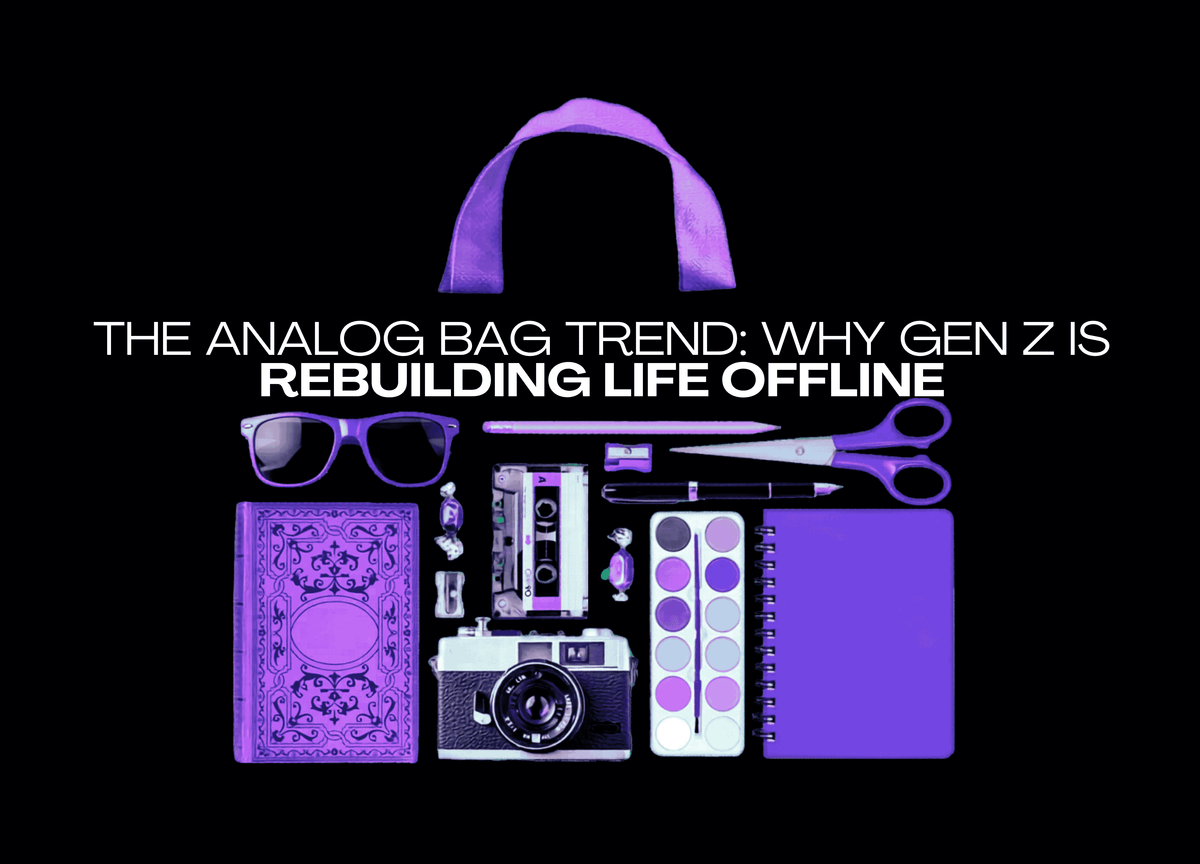
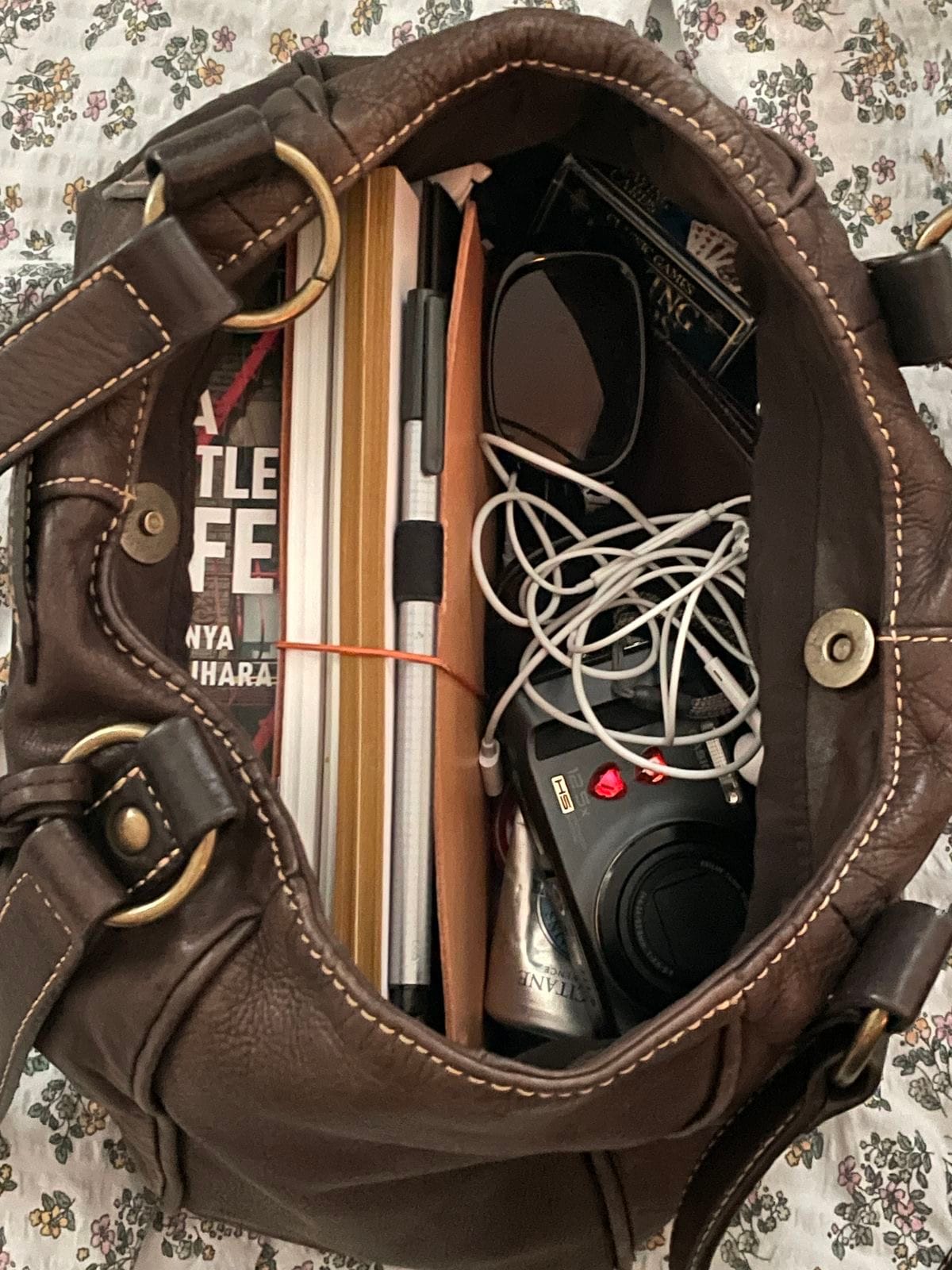
Inside it, you will not find the usual digital arsenal. No chargers, no AirPods, no backup batteries. Instead, there are paperback books with creased spines, 35mm film cameras, handwritten journals, crossword puzzles, sketchpads. Objects that do not notify, vibrate, or demand attention.
This is the “analog bag.” And it is becoming one of the most telling cultural signals of 2026.
At first glance, it reads as aesthetic. Another iteration of Gen Z’s ability to curate identity through objects. But look closer and something more profound emerges. The analog bag is not about style. It is about survival.
How the Analog Bag Trend Signals a Shift in Attention, Identity, and Digital Detox Culture
From Aesthetic to Coping Mechanism
The rise of the analog bag sits within a broader cultural fatigue with the digital environment. For over a decade, the dominant narrative around technology has been one of optimisation. Faster, smarter, more connected. The smartphone became an extension of the self. Social platforms became the primary interface through which culture was consumed, interpreted, and performed. But optimisation has a cost.
Doomscrolling, once a niche term, is now a baseline behaviour. The average user is not simply consuming information. They are absorbing an endless stream of anxiety, comparison, outrage, and stimulation. The result is not just distraction, but depletion. What is shifting now is the response.
Digital detox used to be positioned as a luxury. A weekend retreat. A silent yoga escape. A privilege reserved for those with time and disposable income. It was aspirational, almost performative. The analog bag reframes this entirely.
This is not about escaping the digital world for a weekend. It is about building daily infrastructure to withstand it.
A book in your bag becomes a defensive tool. A notebook becomes a space of control. A film camera becomes a slower, more intentional way of seeing. These are not nostalgic objects. They are functional counterweights to a system that is increasingly overwhelming.
The Recalibration of Attention
At the core of this movement is attention. Attention has become one of the most contested resources of the modern era. Platforms are designed to capture it, hold it, and monetise it. Every scroll is engineered. Every notification is calculated. Every interface is optimised for engagement. The analog bag represents a rejection of this paradigm.
It introduces friction back into everyday life. Reading a physical book requires sustained focus. Writing by hand slows thought down. Film photography removes the instant gratification of digital capture and forces patience. These actions are not efficient. That is precisely the point.
Gen Z is beginning to recognise that efficiency, when applied to attention, is not always beneficial. Faster consumption does not equal deeper understanding. Constant connectivity does not equal meaningful engagement.
The analog bag is, in effect, a tool for recalibrating attention. It allows individuals to step outside algorithmic flows and re-engage with slower, self-directed forms of focus.
The Psychology of Tangibility
There is also a psychological dimension to this shift.
Digital environments are inherently abstract. Content is infinite, weightless, and ephemeral. A post disappears into the feed. A video is replaced within seconds. There is little sense of permanence or ownership. Analog objects, by contrast, are tangible. They occupy space. They age. They carry marks of use.
A notebook filled with handwritten thoughts becomes an archive of the self. A book with annotations becomes a personal dialogue. A roll of film becomes a finite sequence of moments. This tangibility creates a different kind of relationship with content. It is slower, more intimate, more grounded.
In a world where identity is increasingly mediated through screens, the analog bag offers a way to reconnect with physical reality. It is not just about what you consume, but how you experience it.
Anti-Algorithm Culture
The analog bag also signals the emergence of what can be described as anti-algorithm culture.
For years, cultural discovery has been outsourced to platforms. Music, fashion, news, even taste itself has been shaped by recommendation engines. The algorithm became the curator. Now, there is a growing desire to reclaim that role.
Choosing a book from a shelf rather than a feed. Taking a photograph without the intention of posting it. Writing thoughts that are not immediately shared or validated. These are small acts, but they represent a shift in agency.
The analog bag becomes a portable system for self-curation. It allows individuals to define their own inputs, rather than passively receiving them.
The Aesthetic Layer
Of course, Gen Z does not abandon aesthetics. The analog bag is still curated, still considered, still visually expressive. Canvas totes with literary references. Vintage cameras with visible wear. Moleskine-style notebooks. The objects themselves carry cultural capital. But what is interesting is how function and aesthetic are converging.
In previous cycles, objects often existed primarily as signals. The right book, the right brand, the right accessory. Now, there is a deeper layer of utility underpinning the aesthetic.
The book is not just for display. It is being read. The notebook is not just a prop. It is being used. The camera is not just a symbol. It is shaping how moments are captured. This suggests a maturation in how identity is constructed. Less about surface-level signalling, more about lived experience.
What This Signals
The analog bag is not an isolated trend. It is part of a broader cultural recalibration.
1. Digital Saturation Has Reached a Tipping Point
We are moving from a phase of digital expansion to digital exhaustion. The benefits of constant connectivity are now being weighed against its psychological costs.
2. Utility Is Replacing Aspiration
Digital detox is no longer positioned as an aspirational lifestyle choice. It is becoming a practical necessity embedded in daily routines.
3. Slowness Is Gaining Value
In a culture defined by speed, slowness is becoming a form of resistance. Activities that require time and focus are being revalued.
4. Ownership of Attention Is Becoming Strategic
Individuals are beginning to treat their attention as a resource to be protected, rather than something to be freely given away.
What This Means for Culture
Culturally, the implications are significant.
We are likely to see a resurgence in physical media. Not as nostalgia, but as a response to digital overload. Independent bookstores, print publications, and analog creative practices may experience renewed relevance.
Experiences that prioritise presence over documentation will gain traction. Events where phones are discouraged. Spaces designed for focus rather than distraction.
There will also be a shift in how value is assigned. Depth, craftsmanship, and intentionality will become more important than volume and speed.
The analog bag is a microcosm of this shift. A small, everyday object that reflects a much larger transformation.
Implications for Brands and Power
For brands, this trend presents both a challenge and an opportunity.
1. The Attention Economy Is Fragmenting
Capturing attention is becoming harder as individuals actively create boundaries. Traditional digital strategies may become less effective.
2. Physical Touchpoints Matter More
Brands that can exist in the physical world in meaningful ways will have an advantage. Products that are tactile, durable, and designed for real-world use will resonate.
3. Authentic Utility Is Key
Superficial alignment with “offline culture” will not work. Consumers are looking for genuine utility. Products and experiences that actually improve their relationship with attention.
4. New Forms of Cultural Capital Are Emerging
Being “offline” is becoming a form of status. Not in a performative sense, but as an indicator of control and intentionality.
What Happens Next
Looking ahead, the analog bag is likely to evolve rather than disappear.
We may see hybrid models emerge. Digital tools that are designed to complement, rather than dominate, offline experiences. Devices with limited functionality. Apps that encourage disconnection rather than engagement. Education systems and workplaces may begin to integrate more analog practices as a response to cognitive overload.
There is also potential for this movement to scale beyond individuals. Entire communities, spaces, and systems designed around reduced digital dependency.
The key question is not whether people will abandon technology. They will not. The question is how they will reshape their relationship with it.
Who Should Pay Attention
- Founders and Product Designers
There is an opportunity to build tools and products that support intentional living. The next wave of innovation may not be about adding features, but removing them.
- Media and Content Platforms
The assumption that more content equals more engagement is being challenged. Depth and quality may become more important than volume.
- Retail and Physical Spaces
Spaces that facilitate offline experiences will become increasingly valuable. Bookstores, cafés, and community hubs can position themselves as sanctuaries from digital noise.
- Investors
This is an early signal of a broader shift in consumer behaviour. Businesses that align with this movement may see long-term growth.
Alongside this shift, Gen Z’s relationship with the physical world is also being redefined through the body itself, as explored in our analysis of Gen Z Skincare Trends: Visible Beauty & Wearable Wellness, where skincare becomes something worn, displayed, and integrated into daily life rather than hidden or purely cosmetic.
 Brad Davidson